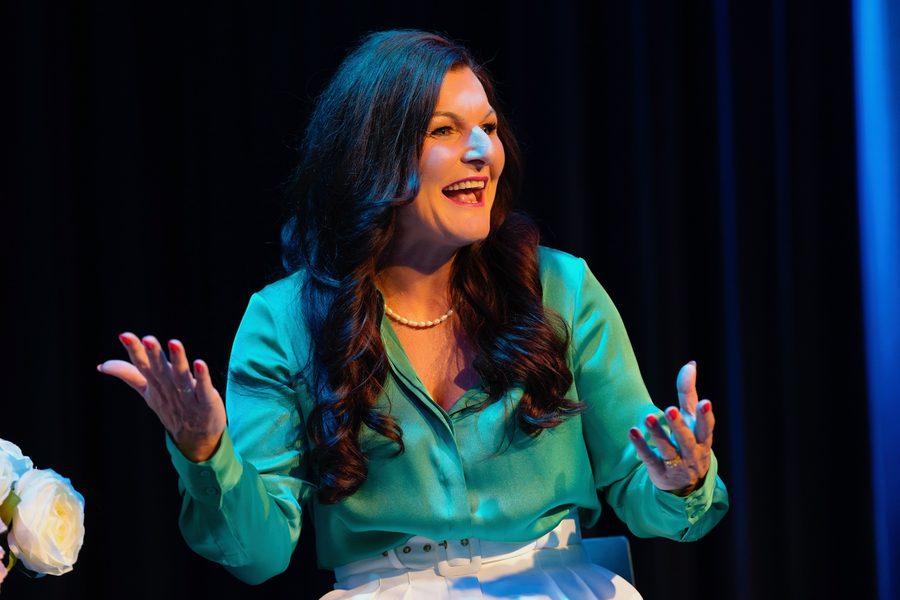
Nexus delivers full-service association management to professional, trade and not-for-profit organisations across Australia and the Asia–Pacific region. We are the strategic and operational partner your association deserves. Led by Annie Gibbins — author of AI for Association Leaders and Grand Stevie Award Winner.
Strategic board facilitation, governance frameworks, constitution reviews and AGM management.
↗
02
Membership Management
Acquisition, retention, CRM, member portals and engagement strategy built for long-term growth.
↗
03
Financial Administration
Full-scope accounting, budgeting, audit preparation and transparent financial reporting.
↗
04
Events & Conferences
End-to-end event delivery — from intimate board retreats to national conferences and gala dinners.
↗
05
Communications & Marketing
Brand management, member communications, digital content, media relations and advocacy campaigns.
↗
06
Advocacy & Policy
Government relations, submissions, legislative monitoring and sector representation at all levels.
↗
07
AI Implementation
We help associations harness the power of artificial intelligence — from member experience automation and smart communications to AI strategy, tools selection and staff upskilling. Led by author and AI specialist Annie Gibbins.
↗
08
Conference MC & Speaking
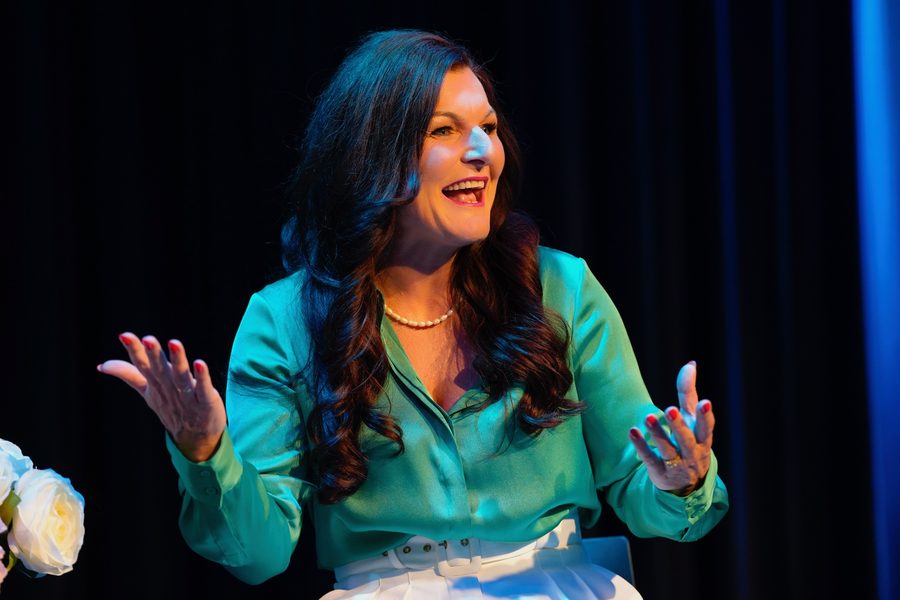
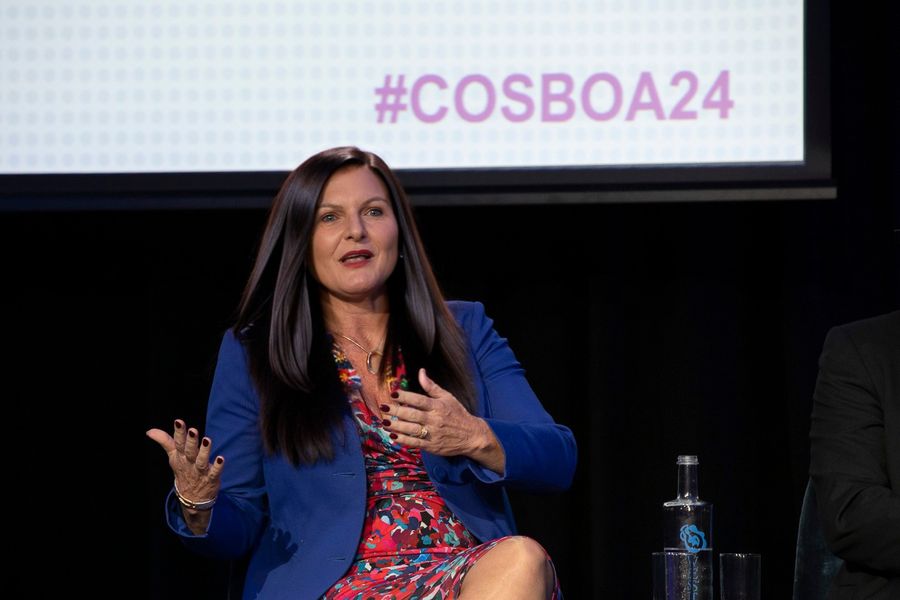
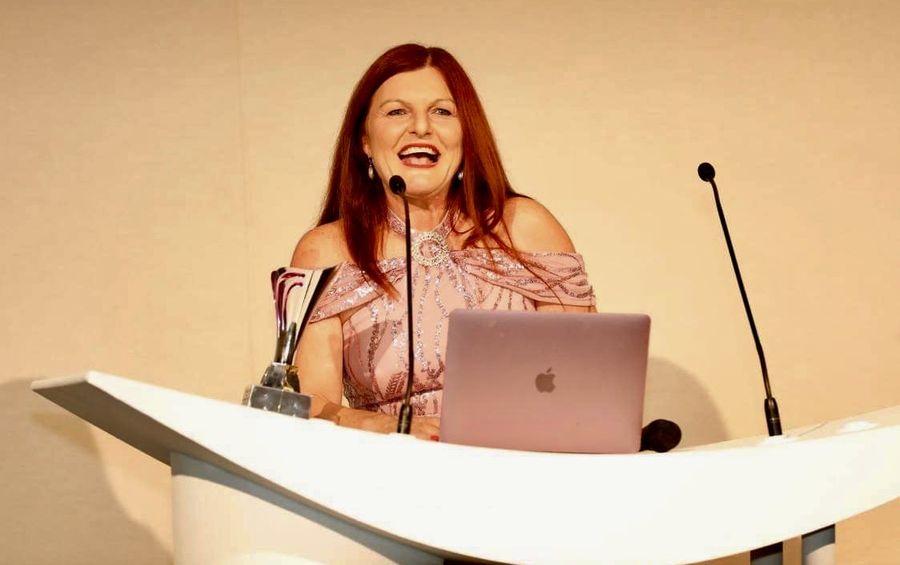
Annie Gibbins is a dynamic, warm and deeply experienced conference MC and keynote speaker — energising rooms, drawing out the best in panels, and leaving audiences inspired to lead differently.
↗
Built for Exceptional Associations
Why Associations Choose Nexus
We bring the full weight of our expertise, systems and people to every client relationship. Our model is built on transparency, accountability and a genuine commitment to your association's mission — not just its management.
Dedicated Account Team per Client
Tailored, Flexible Service Packages
Conference MC & Keynote Speaker
1000+
Associations Served
Strategic
Growth Specialist
AI
Implementation
20+
Years Experience
⭐⭐⭐⭐⭐
"
Annie Gibbins is a game-changing, revenue-building, performance-boosting change expert, and a top leadership development coach, highly respected authority on growing and building businesses through empowered leadership.
Linda Fisk
Chairwoman, LeadHERship Global
⭐⭐⭐⭐⭐
"
Annie has a way of cutting through the noise and giving you absolute clarity. My association grew faster in 6 months than it had in the last 3 years.
Rachel T.
Association CEO
⭐⭐⭐⭐⭐
"
Working with Annie helped me lead with more confidence, implement AI tools without overwhelm, and stay aligned with my purpose — and my revenue has doubled.
Janelle M.
SME Founder
⭐⭐⭐⭐⭐
"
I came to Annie for strategy but what I got was transformation. She's the mentor every heart-led leader needs.
Darius V.
Executive Director
Start the Conversation
Ready to Elevate Your Association?
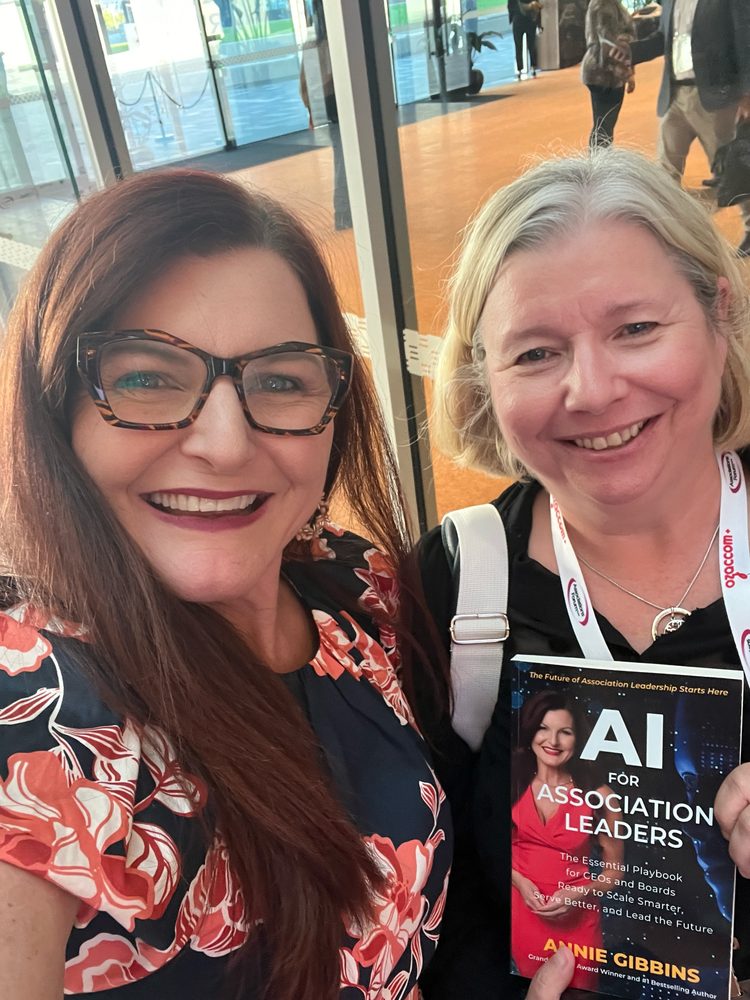
Let's begin with a confidential conversation about where your association is today — and where you want it to be. Or grab Annie's book AI for Association Leaders — the essential playbook for CEOs and boards.
Our Story
Built for Associations That Refuse to Stand Still
We founded Nexus on a simple belief: that professional associations are the backbone of industries and professions — and they deserve management that matches their ambition.
"Recognised globally for excellence in women's leadership"
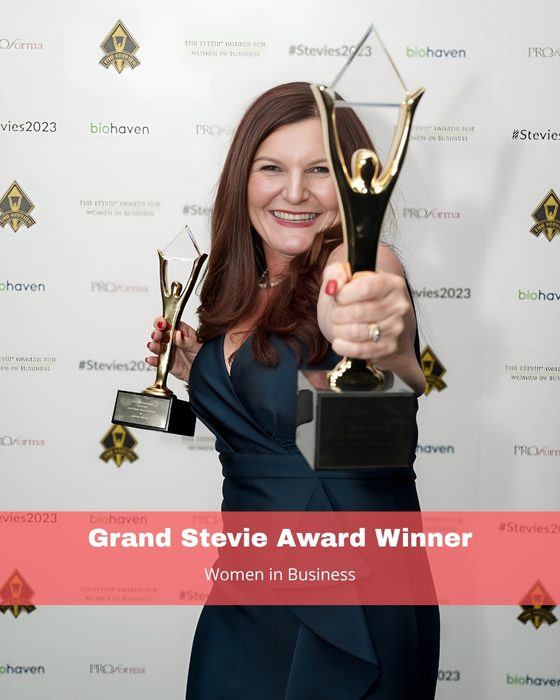
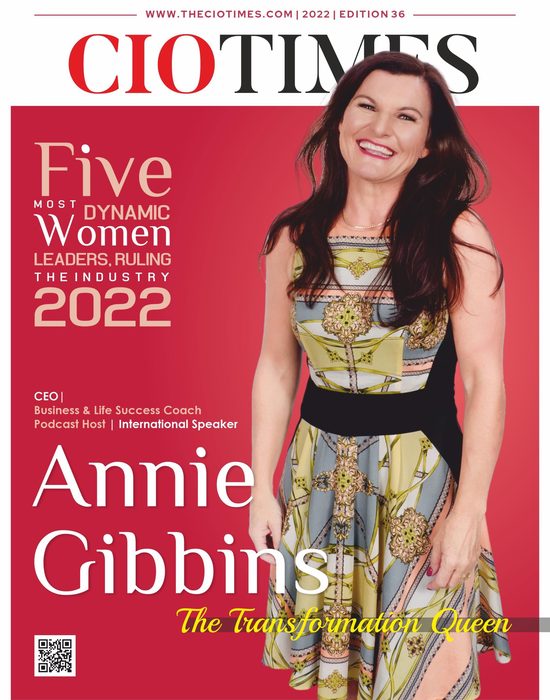
Annie Gibbins is a Grand Stevie Award Winner for Women in Business — one of the most prestigious international recognitions for women in leadership.
Combined with her credentials as a published author, 15+ year association CEO, and AI implementation pioneer, Annie brings a rare combination of strategic depth and on-stage presence to every client engagement.
🏆
Grand Stevie Award Winner 🏆
15+
Years as Association CEO
📖
Published Author
#1 Bestselling Author
AI for Association
Leaders
The Essential Playbook for CEOs and Boards Ready to Scale Smarter, Serve Better, and Lead the Future
One of the first books of its kind globally, AI for Association Leaders gives CEOs, boards and executive teams a clear, practical roadmap for implementing AI within their organisations — without the overwhelm.
Written by Annie Gibbins from 15+ years of lived experience running associations, the book bridges the gap between AI hype and real-world association practice. It is already being used by associations across Australia and internationally.
Every decision we make — every service we offer — flows from our core purpose. We exist to connect associations with the management excellence they deserve.
Mission
To connect associations with the management excellence they deserve — enabling every member organisation to thrive and fulfil its purpose.
Vision
To be the most trusted association management company in the Asia–Pacific region — measured not by size, but by the outcomes we deliver for our clients.
Our Approach
How We Work
We don't believe in one-size-fits-all management. Every association we partner with receives a dedicated account team, a tailored service package, and a management approach shaped around their unique mission and membership. We also specialise in AI implementation — helping associations navigate and adopt artificial intelligence in practical ways that deliver real value.
Our team of Certified Association Executives brings deep sector expertise — in governance, membership, finance, events and communications. You deal with the same experienced people, year after year.
Transparency and accountability are not buzzwords here — they are built into every contract, every financial report, and every board meeting we facilitate.
We hold ourselves to the highest professional standards — for our clients, their members, and the profession of association management itself.
02
Integrity
We are transparent, honest and accountable in everything we do. Our clients trust us with their most important organisational responsibilities — and we take that seriously.
03
Partnership
We don't just manage associations — we become genuine partners in their mission. Your success is our success, and we invest in it wholeheartedly.
04
Innovation
The association landscape is changing. We stay ahead of the curve — in technology, governance practice, member engagement and communication — so our clients don't have to.
The Founder Behind NEXUS
Meet Our Founder & CEO
Grand Stevie Award Winner 🏆
Annie Gibbins BHlthSc MEd (VocEd) AICD
Chief Executive Officer & Founder
Annie Gibbins is a Grand Stevie Award Winner, Gold, Silver & Bronze Stevie Award recipient, and the #1 Bestselling author of AI for Association Leaders — one of the first books of its kind globally. With 15+ years as a CEO in the associations sector, Annie brings unmatched expertise in association management, governance, membership growth and the practical implementation of AI within member organisations. A certified Lean Six Sigma practitioner, Annie brings operational rigour to every client engagement — ensuring associations don't just grow, but run with precision. She founded Nexus to give every association access to the calibre of leadership and management they deserve.
What We Offer
Full-Service Association Management
From governance to gala dinners, membership to media — we handle every aspect of your association's operations. We also specialise in AI implementation, helping associations harness the power of artificial intelligence to improve member experience, automate workflows and stay ahead of the curve.
Our Services
Everything Your Association Needs
01
Governance & Board Support
We work hand-in-hand with your board to strengthen governance, streamline decision-making, and ensure your organisation meets every compliance obligation. From AGMs to board inductions, we handle the complexity so your directors can lead with confidence.
Board meeting facilitation & minutes
Constitution reviews & updates
AGM & SGM management
Director induction & training
Governance health assessments
Conflict of interest registers
02
Membership Management
Members are the lifeblood of every association. We build and execute membership strategies that attract the right people, deliver compelling value, and keep renewal rates high — year after year.
Membership acquisition campaigns
CRM implementation & management
Member portal design & support
Renewal campaigns & lifecycle management
Member surveys & research
Tiered membership structure design
03
Financial Administration
Transparent, accurate and audit-ready financial management is non-negotiable for any professional association. Our finance team ensures your books are clean, your budget is realistic, and your board has the financial clarity it needs.
Full-scope bookkeeping & accounting
Annual budget preparation
Monthly financial reporting to board
Audit preparation & liaison
Grants & sponsorship financial management
Investment policy support
04
Events & Conferences
From intimate board retreats to national conferences of 2,000+ delegates, our events team delivers experiences that energise members, generate revenue, and showcase your sector at its best.
Annual conference management
Gala dinners & award ceremonies
CPD & professional development events
Webinar & virtual event production
Sponsorship sales & management
Exhibition management
05
Communications & Marketing
Your brand is your association's most valuable asset. We protect and build it — across every channel, every communication, and every member touchpoint — with strategy-led content and consistent execution.
Brand management & guidelines
Member e-newsletters & communications
Social media management
Website content & management
Annual reports & publications
Media relations & PR
06
Advocacy & Policy
A credible, authoritative voice in government is a hallmark of a mature association. We help you build that voice — through strategic advocacy, well-crafted submissions, and sustained engagement with decision-makers.
Government relations strategy
Regulatory submissions & consultations
Legislative monitoring & reporting
Stakeholder mapping & engagement
Policy position development
Media commentary & thought leadership
07
AI Implementation
Nexus is a pioneer in AI implementation for the associations sector. Led by Annie Gibbins — #1 Bestselling author of AI for Association Leaders and Grand Stevie Award Winner — we help associations understand, adopt and operationalise AI in practical, meaningful ways that benefit their members, their boards and their teams.
AI readiness assessment
Tools selection & implementation
Member experience automation
Smart communications & personalisation
Board & staff AI upskilling workshops
AI strategy development
08
Conference MC & Speaking
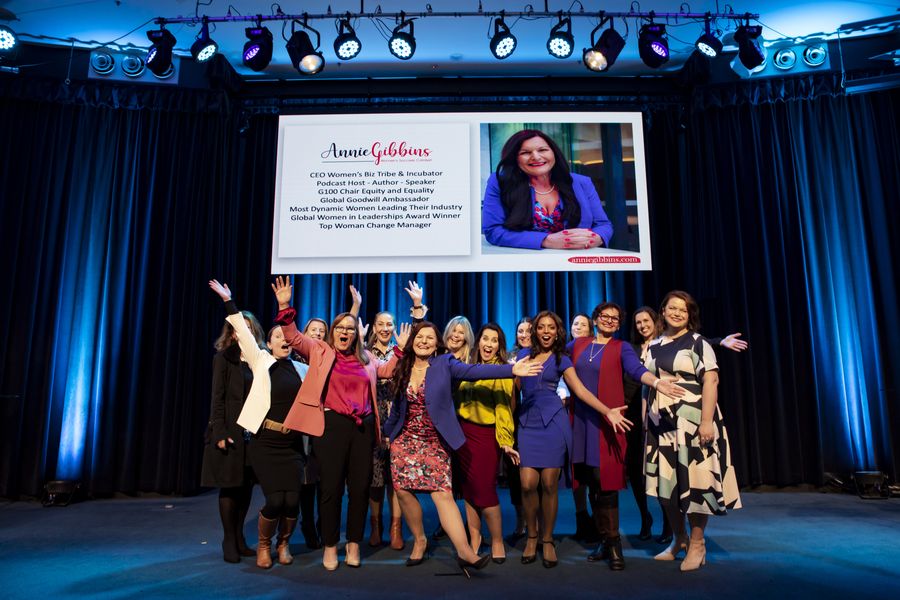
Annie Gibbins is one of Australia's most engaging conference MCs and keynote speakers. With 15+ years leading associations and a gift for connecting with audiences, Annie brings warmth, wit, authority and energy to every stage she stands on — from intimate leadership forums to national conferences of thousands.
Whether you need a skilled MC to hold your event together, a keynote that shifts thinking on AI and leadership, or a panel facilitator who draws out the best in every speaker, Annie delivers an experience your delegates will remember.
Conference MC & hosting
Keynote speaking — AI, Leadership & Associations
Panel facilitation & moderation
Awards ceremonies & gala dinner hosting
Workshop facilitation
Virtual & hybrid event hosting
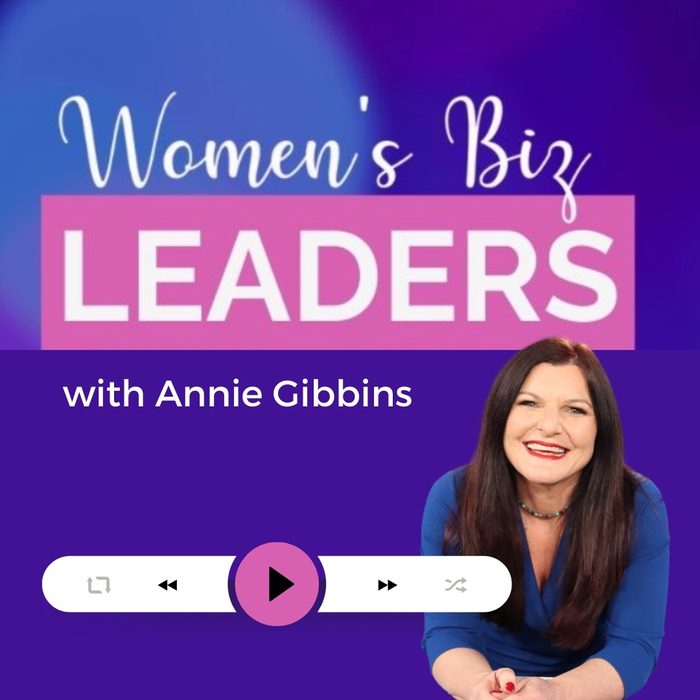
TV Host — Women's Biz Leaders on Ticker TV
Book Annie to Speak
An Unforgettable Stage Presence
Grand Stevie Award Winner. Author. Association CEO. AI Pioneer.
Annie speaks on AI & Leadership, Association Growth, Empowered Leadership and the Future of Professional Communities. She brings real stories, practical tools and a warmth that makes every audience feel seen.
Keynote
AI for Leaders: Practical, Powerful & Human
Keynote
Growing Associations in the Age of Disruption
Keynote
Empowered Leadership: Leading with Purpose & Impact
We offer three engagement models — from targeted support through to full-service management. Every package is customisable. Contact us to discuss your specific requirements.
Foundation
Essential Support
Selected services for smaller associations or those looking to supplement an existing team.
Choose 2–3 service areas
Dedicated contact person
Monthly reporting
Annual strategic review
Most Popular
Partnership
Full Management
Comprehensive association management — the most popular choice for mid-size professional associations.
All six service areas
Named account team (3–4 staff)
Board meeting attendance
Quarterly strategic reviews
Dedicated office & address
Enterprise
Executive Partner
For larger associations requiring a full executive function and dedicated team entirely focused on their organisation.
All services + bespoke additions
Embedded executive director
Full team of 6–8 specialists
CEO-level board reporting
Strategic plan co-development
Knowledge & Insights
Association Management Insights
Practical thinking on governance, member engagement, events and strategy — from the Nexus team and our network of association management experts.
AI
8 min read
Featured · AI & Leadership
I wrote a book about AI for associations before most people could spell “ChatGPT”. Here’s what I’ve learned since.
When I started writing AI for Association Leaders, colleagues looked at me like I had two heads. Now those same people are asking me to keynote their conferences. The truth is, I wasn’t ahead of my time — I was just paying attention.
The moment I knew AI was going to change our sector forever wasn’t in a boardroom or at a conference. It was at 11pm on a Tuesday, when I watched a CEO send a membership renewal email to 4,000 people — manually, one by one, because nobody had told her there was a better way.
I’ve spent 15 years running associations. I know the workload. I know the resource constraints. I know that most association CEOs are brilliant people doing the work of three full-time employees with the budget of one.
That’s exactly why AI isn’t optional for us anymore. It’s the great equaliser.
Here’s what the last two years of implementing AI inside associations has taught me: the technology is the easy part. The culture change is the work. Boards who are afraid of AI aren’t afraid of technology — they’re afraid of being left behind, of making a mistake, of looking foolish in front of their members.
My job, and the job of every forward-thinking association leader, is to make AI feel safe enough to explore and practical enough to use. That’s what my book is about. And honestly? That’s what I wake up for every day.
What surprised me most since publication isn’t the enthusiasm — I expected that. It’s the fear that lives underneath the enthusiasm. Even the most tech-forward CEOs I know have a quiet voice asking: what if I get this wrong? What if I implement something that harms our members, our brand, our mission?
That fear is healthy. It means you care. But fear without a framework becomes paralysis. And paralysis in the face of AI adoption isn’t safe — it’s a different kind of risk. The risk of irrelevance. The risk of watching better-resourced competitors do in minutes what takes your team days.
The associations leading in AI right now didn’t leap blindly. They walked in with clear values, clear boundaries, and a genuine curiosity about what’s possible. That’s the posture I’d encourage every CEO and board to adopt — not reckless adoption, not fearful avoidance, but informed, values-led exploration. That’s where the magic is.
AG
Annie Gibbins BHlthSc MEd (VocEd) AICD
Founder & CEO, Nexus Association Management
Grand Stevie Award Winner · Author of AI for Association Leaders · 15+ year Association CEO · Conference MC & Keynote Speaker
The boardroom is broken. And as association CEOs, we’re the only ones who can fix it.
After 15 years sitting in boardrooms, I’ve noticed something. The associations that struggle aren’t struggling because of bad strategy. They’re struggling because of bad governance. And nobody wants to say it out loud.
“A board can't govern well when it's overworked, under-informed, and running on the smell of an oily rag.”
I’ll say it: most association boards are exhausted, under-resourced, and operating on governance frameworks designed for a world that no longer exists.
I’ve watched brilliant, passionate volunteer directors burn out within 18 months — not because the work wasn’t meaningful, but because the structures around them made everything harder than it needed to be. Unclear terms of reference. No proper induction. Meetings that run three hours and still don’t reach a decision. Agendas buried in operational detail when the board should be thinking strategically.
When I took on my first CEO role, my board chair told me something I’ve never forgotten: “Annie, a board can’t govern well what it doesn’t understand.” He was right. But I’d add to that: a board can’t govern well when it’s overworked, under-informed, and running on the smell of an oily rag.
Modern governance is about clarity. Clear roles. Clear accountability. Clear decision rights. And yes — clear boundaries between the board’s job and the CEO’s job.
The associations I’ve seen thrive are the ones where the board trusts the CEO to lead, and the CEO trusts the board to govern. Getting to that trust takes work. But it is absolutely worth it.
Start with your board charter. When did you last update it? If the answer is “I’m not sure” or “we don’t have one” — that’s your starting point. A clear, current board charter is the single most powerful governance document your association can have.
Your members aren’t leaving because of your subscription price. They’re leaving because of something far more fixable.
Every time an association CEO tells me they have a “membership problem”, I ask the same question: when did you last ask a member why they stayed? The answer is almost always silence. And that silence is costing you.
“Retention is a value problem. And value is entirely personal.”
Membership retention is not a pricing problem. I’ve never once seen an association dramatically improve its retention rate by dropping the membership fee. Not once.
Retention is a value problem. And here’s the thing about value — it’s entirely personal. What I value in my professional association membership is completely different from what you value. And if you’re sending the same generic email to both of us, you’re connecting with neither of us.
In my experience, members leave an association for one of four reasons: they don’t use it enough, they don’t feel seen, they’ve found value elsewhere, or something in their life changed and they haven’t been given a reason to reprioritise you.
Three of those four are things you can influence.
The associations I’ve worked with that have the highest retention rates do one thing better than everyone else: they communicate relevance. Every touchpoint — every email, every event invitation, every renewal notice — is designed to remind the member why this organisation matters to their career, their profession, their identity.
That doesn’t require a big budget. It requires a clear understanding of your member segments and the discipline to speak to each one as an individual.
5 AI tools I actually use to run associations — and the ones I tried and quietly abandoned.
Everyone’s writing about AI tools. Most of it is theoretical. I’m a CEO who has actually implemented these tools inside real associations, with real budgets and real volunteer boards who needed convincing. Here’s the honest version.
“If a task involves creativity, relationships, or values-based judgment, keep the human at the centre.”
Let me be clear upfront: I’m not a tech evangelist. I’m an association CEO who has spent the last few years figuring out what actually works for organisations like ours, with our constraints, our cultures, and our members.
The tools I come back to again and again are the ones that save real time on real tasks. AI meeting summary tools that turn a 90-minute board meeting into a clean set of minutes in under five minutes. Member communication tools that personalise content at scale without losing the human voice. Research tools that let a small secretariat punch above its weight on policy submissions.
The ones I’ve quietly abandoned? Anything that promised to replace human judgment. AI is extraordinary at augmenting what we do. It’s not — yet — equipped to replace the relational, contextual, emotionally intelligent work that great association management actually requires.
My rule of thumb is this: if a task involves creativity, relationships, or values-based judgment, keep the human at the centre. If it’s repetitive, data-heavy, or time-consuming, explore whether AI can help.
The tools worth your time right now: AI meeting assistants (Otter.ai, Fireflies), AI writing assistants for member communications (Claude, ChatGPT with a strong brand voice prompt), AI research tools for policy work, and CRM platforms with AI-powered segmentation built in.
The tools I’d hold off on: anything claiming to fully automate member relationships. Your members joined a community of humans. Keep it that way.
Most of the magic happens in the middle — where AI handles the heavy lifting and your people handle the heart.
Winning the Grand Stevie Award didn’t change how I saw myself. But it changed how others did — and that taught me something important.
I’ll be honest: when I walked onto that stage in New York and held those trophies, the first thing I thought was “I’m going to drop one.” The second thing I thought was “I wish more women in associations could have this moment.” Here’s what the Stevie Award really taught me.
“Recognition doesn't always find you. Sometimes you have to put your hand up.”
Awards are strange things for women in leadership. We’re often taught — sometimes explicitly, often implicitly — that ambition is unseemly, that self-promotion is arrogance, that letting others celebrate you is somehow indulgent.
I spent a long time operating by those rules. Doing excellent work quietly. Letting the results speak for themselves. Assuming that if I was good enough, the recognition would come.
Here’s what I know now that I didn’t know then: recognition doesn’t always find you. Sometimes you have to put your hand up and say, “I did this. It mattered. And I’d like it to be counted.”
Winning the Grand Stevie Award for Women in Business didn’t make me more capable. I was already capable. What it did was make my capability visible — to clients, to peers, to the boards that were deciding whether to trust me with their associations.
Visibility is currency in our profession. And we have a responsibility to use it — not for ego, but to open doors for the women coming up behind us.
The associations sector has extraordinary women in it. Deeply experienced, fiercely committed, quietly brilliant women who are running complex organisations with grace and rigour and very little fanfare.
So if you’ve been sitting on an award application because it feels too self-congratulatory: submit it. Your work deserves to be seen.
Why your annual conference is probably your association’s biggest untapped revenue opportunity. And how to fix that.
Most associations treat their annual conference as a cost centre with an events line in the budget. The associations I’ve worked with who transformed their financial position all started in the same place: they stopped thinking about their conference as an event and started thinking about it as a platform.
“Stop thinking about your conference as an event. Start thinking about it as a platform.”
Here’s a number that will focus your attention: the average association conference generates 35–40% of total annual revenue. And yet most conferences are planned the same way they were planned 15 years ago — same format, same sessions, same sponsorship brochure, same registration pricing.
The associations that are genuinely growing their conference revenue are the ones who have done three things differently.
First, they’ve rebuilt their sponsorship offer from scratch — starting with what sponsors actually want (data, relationships, leads, thought leadership positioning) rather than what’s easiest to sell (a logo on a lanyard).
Second, they’ve diversified their revenue streams within the conference itself. Pre-conference workshops. Executive masterclasses. Hosted buyer programmes. Satellite events. Digital access passes for members who can’t attend in person.
Third — and this is the one most people miss — they’ve made the conference experience worth talking about. Word of mouth is still the most powerful marketing channel in the association world, and the only way to generate it is to give people an experience genuinely worth sharing.
A conference that people talk about for weeks afterwards doesn’t happen by accident. It happens because someone — a great CEO, a great team, or a great MC who knows how to hold a room — made a deliberate decision to prioritise the delegate experience above everything else.
Your conference is not an obligation. It’s an opportunity. Treat it like one.
Your board is scared of AI. Here’s the conversation you need to have — and how to have it without losing anyone.
I’ve presented AI strategy to more boards than I can count. The reaction is almost always the same: a mix of genuine curiosity and quiet terror. Here’s the framework I use to turn that terror into momentum.
“Don't give your board a lecture on AI. Give them a framework, examples, and a decision to make.”
Board members are smart, experienced, and — when it comes to AI — often operating on about 20% of the information they need to make good decisions. They’ve read the alarming headlines. They’ve heard the buzzwords. But they haven’t had someone sit down with them and say, clearly and without jargon: here’s what this actually means for our organisation.
That’s your job as CEO. And it’s one of the most important conversations you’ll have in the next 12 months.
When I facilitate AI strategy sessions with boards, I start in the same place every time: not with the technology, but with the problems we’re already trying to solve. Member retention. Staff capacity. Event attendance. Policy influence. Then I show — with real examples — how AI is helping associations like ours address those specific problems.
The conversation shifts from abstract fear to practical possibility within about 20 minutes. That shift is everything.
Boards don’t need to become AI experts. They need to understand three things: what the risks are and how they’re being managed, what the opportunities are and what we’d need to capture them, and what their role in governance looks like as AI becomes part of our operations.
Give them a framework, not a lecture. Give them examples, not abstractions. Give them a decision to make, not a concept to absorb.
Give them clarity on those three things, and you’ll have a board that’s ready to lead — not one that’s paralysed by uncertainty.
What 15 years on stages taught me about the difference between a speaker and a communicator.
I’ve watched some of the most credentialed, impressive people I know completely lose a room within three minutes. And I’ve watched a nervous first-time speaker have 400 people on their feet by the end. The difference has nothing to do with expertise. Here’s what it actually comes down to.
“Stop rehearsing your slides. Start rehearsing your humanity.”
Every year I MC dozens of events across Australia. I watch hundreds of speakers — CEOs, academics, thought leaders, ministers, researchers. And I’ve noticed something that the speaking industry almost never talks about.
The best speakers aren’t performing expertise. They’re having a conversation.
There’s a version of stage presence that’s about projection, authority, presence. It’s impressive. It can be compelling. But it rarely moves people.
The version that moves people is the one where the speaker is clearly, genuinely in relationship with the room. Where they notice the person in the third row who’s nodding. Where they adjust mid-sentence because they can feel that they’ve lost someone. Where they tell the true story, not the polished one.
I speak about AI and leadership not because I’ve memorised the data — though I know it well — but because I care deeply about what happens to our sector if we get this wrong. That caring is audible. It’s visible. And audiences respond to it in a way they simply don’t respond to a well-rehearsed presentation.
The most powerful thing you can do before you step on any stage is ask yourself: what do I actually want this audience to feel when they walk out? Not think. Feel.
If you want to be a better speaker, stop rehearsing your slides. Start rehearsing your humanity.
Most associations are one bad year away from crisis. Here’s how to build an organisation that can weather anything.
I’ve walked into associations that look perfectly healthy on the surface — good membership numbers, a successful conference, an engaged board — and found financial reserves that would last approximately four months if anything went wrong. This is more common than you think. And it’s fixable.
“Short-term restraint creates long-term freedom. That's a conversation every board needs to have.”
Financial resilience is the unglamorous cousin of strategic growth. Nobody wants to talk about reserves policies and revenue diversification when there are members to engage and events to plan. But I’ve seen what happens to associations that don’t have these conversations — and it’s not pretty.
The associations that survived COVID without cutting staff, without cancelling programs, without panicked emergency board meetings — were the ones that had done the boring work years earlier. They had reserves. They had diversified revenue. They had flexible cost structures. They had scenario plans sitting in a folder that suddenly became the most important documents in the building.
Building a financially resilient association doesn’t require a massive endowment or a windfall sponsorship. It requires discipline and a board that understands that short-term restraint creates long-term freedom.
I recommend every association have a minimum of six months operating expenses in unrestricted reserves. Most have two to three. Getting from two to six doesn’t happen overnight — but it starts with a board resolution to make it a priority, and a CEO who keeps that priority visible in every budget conversation.
Revenue diversification matters just as much. If more than 50% of your revenue comes from a single source — membership fees, one major sponsor, one conference — you’re exposed. Identify that exposure. Then spend the next 24 months systematically reducing it.
None of this is exciting. All of it is essential.
Your members are counting on you to still be here in 10 years. Build accordingly.
The association of 2030 looks nothing like the association of today. Here’s how to make sure yours is still relevant.
I think about this a lot. Not with anxiety — with genuine excitement. Because the associations that are willing to reimagine themselves right now are going to be extraordinary. And the ones that aren’t? They’re going to be very difficult to save.
“The associations that thrive in 2030 aren't waiting to see what happens. They're deciding what happens.”
Our sector is being reshaped by forces that aren’t going to slow down: AI, demographic shift, the changing nature of professional identity, the collapse of geographic boundaries, the rise of micro-communities.
The professional associations that thrive in 2030 won’t just be different versions of what they are today. They’ll be genuinely new kinds of organisations — more agile, more personalised, more digitally native, more global in reach and more intimate in connection.
I believe the association model is more relevant now than it has ever been. In a world of information overload, people are craving trusted communities and credentialed knowledge. In a world of AI-generated content, they’re craving human expertise and peer connection. In a world of constant disruption, they’re craving professional anchoring.
We provide all of that. We just need to deliver it differently.
The CEOs I most admire right now are the ones running their organisations with one eye on the present and one eye firmly on the horizon. They’re not waiting to see what happens. They’re deciding what happens.
They’re investing in AI literacy across their teams. They’re experimenting with new membership models. They’re asking harder questions in board meetings. They’re reading widely outside the sector.
That’s the kind of leader this moment requires. I genuinely believe it’s the kind of leader you can be.
The AI question every association CEO will be asked in 2026 — and how to answer it confidently.
At some point in the next 12 months, a member, a board director, a journalist, or a prospective client is going to ask you: “What is your organisation doing about AI?” Are you ready?
“You don't need to have all the answers. You need to have a thoughtful, honest response — and a plan.”
I’ve been asked this question in boardrooms, at conferences, in media interviews, and over coffee with CEOs who are quietly panicking. And the honest answer is: most association leaders aren’t ready for it.
Not because they’re incompetent — far from it. But because they’ve been so busy running their organisations that they haven’t had time to develop a considered, confident position on AI.
Here’s the thing. You don’t need to be an AI expert to answer this question well. You need to be a thoughtful leader who has done some reflection and developed a genuine organisational position.
The answer I coach CEOs to give has three parts: what we’ve already done (even if it’s small), what we’re currently exploring, and the values and principles that are guiding our approach.
That framework works whether you’re an early adopter or just beginning your AI journey. It signals that you’re engaged, considered, and in control — which is exactly what members, boards and media want to see from their association leaders.
Draft your answer this week. Say it out loud. Record yourself. Refine it. You’ll be glad you did.
The associations that come to be known as AI leaders in our sector won’t necessarily be the ones who moved fastest. They’ll be the ones who moved most thoughtfully — and who had the language ready when it mattered.
The member engagement metric nobody tracks — but everyone should.
We track renewals. We track new member numbers. We track event attendance. But the metric that actually predicts all of those? Almost nobody measures it. Let me introduce you to member activation rate.
“A member who hasn't used their membership in 90 days is a member who's already leaving — they just haven't told you yet.”
Member activation rate is simple: what percentage of your members have engaged with at least one meaningful touchpoint in the last 90 days?
Not “received an email” — that’s not engagement, that’s delivery. I mean clicked, attended, downloaded, commented, connected, volunteered, or participated in something that your association provided.
In my experience, most associations have an activation rate of between 20% and 40%. Which means that between 60% and 80% of members are passengers — paying their dues and getting nothing back.
Those are your at-risk members. And the tragedy is that most of them don’t intend to leave. They’re just busy. They joined with good intentions and then life got in the way and your association never did quite enough to pull them back in.
The fix isn’t more emails. It’s more relevant, more timely, more personalised reasons to engage.
Start measuring activation quarterly. Set a target. Build a re-engagement programme for members who have gone dark. You’ll be astonished at how many respond when you reach out with something genuinely useful.
The members you save through re-engagement cost a fraction of what it costs to recruit new ones. This is one of the highest-return activities in association management. And almost nobody does it well.
I’ve been a CEO for 15 years. Here’s what I wish someone had told me in year one.
The first year of a CEO role in an association is unlike anything else in professional life. The learning curve is vertical, the expectations are enormous, and nobody gives you a manual. Here’s mine.
“Your job is not to have all the answers. Your job is to ask better questions than anyone else in the room.”
I remember my first board meeting as CEO with total clarity. I sat at the head of the table, looked around at twelve experienced directors, and thought: “I hope none of them ask me anything I don’t know.”
That was my first mistake. The job of a CEO isn’t to know everything. It’s to lead — and leading requires curiosity far more than it requires certainty.
The second thing I wish I’d known: your relationship with your board chair is the most important professional relationship in your career. Invest in it like it’s your most valuable asset. Communicate proactively. Share concerns early. Never let your chair be surprised.
Third: the members are always right about what they need, and rarely right about what will deliver it. Your job is to close that gap — to understand their needs deeply and design solutions they might not have imagined themselves.
Fourth — and this took me years to learn: rest is a leadership strategy. A burnt-out CEO makes bad decisions, drives away good staff, and models exactly the wrong behaviour for an organisation full of passionate, over-committed people.
And finally: find your peers. The CEO role is a lonely one. The association management community is full of brilliant, generous people who will share their experience freely if you simply ask. Join the networks. Go to the conferences. Have the coffees.
You don’t have to figure this out alone. And you absolutely shouldn’t try.
Before your association buys any AI tool, ask these six questions.
I’ve watched associations spend thousands on AI tools they never properly implement and tens of thousands on platforms that don’t talk to their existing systems. A little due diligence goes a very long way. Here are the six questions I ask before recommending anything.
“The best AI tool is the one your team will actually use — not the one with the most impressive demo.”
Question one: what specific problem are we solving? If you can’t name a concrete task or process that this tool will improve, you’re not ready to buy it.
Question two: who will actually use this day-to-day? The CEO’s enthusiasm for an AI tool means nothing if the operations manager who has to use it every morning finds it frustrating.
Question three: how does it integrate with our existing systems? CRM, membership database, finance software, event platform. An AI tool that doesn’t talk to your core systems creates more work, not less.
Question four: what does the vendor’s data privacy policy look like? Your member data is your responsibility. Make sure you understand exactly what the vendor does with information that flows through their platform.
Question five: what does implementation actually require? Not the vendor’s optimistic estimate — the realistic one. How many hours of staff time? What training is needed? What’s the change management requirement?
Question six: how will we know if it’s working? Define your success metrics before you sign, not after.
Run every AI tool consideration through these six questions. You’ll make better decisions, avoid expensive mistakes, and build a technology stack that actually serves your mission.
The governance conversation your board is probably avoiding — and why it can’t wait.
There’s a topic in almost every association boardroom that quietly makes people uncomfortable. It goes by different names — succession planning, board renewal, director performance. Whatever you call it, most boards avoid it. That avoidance has consequences.
“The board that never challenges itself will eventually be challenged by its members. Better to choose renewal over revolt.”
I’ve worked with associations where the same directors have served for 10, 12, even 15 years. And I want to be clear: longevity isn’t inherently a problem. Experience is genuinely valuable. Institutional knowledge matters.
But there’s a difference between a long-serving director who keeps growing, keeps contributing, keeps bringing fresh thinking — and one who has calcified into a comfortable fixture.
The governance conversation that most boards avoid is the honest one: are we the right people, with the right skills, to lead this organisation through the next five years?
That question requires boards to think carefully about skills matrices — what expertise do we have and what do we need? It requires them to have honest conversations about director performance. And it requires a genuine commitment to renewal — bringing in new voices, new perspectives, new networks.
The best boards I’ve worked with have a culture of constructive challenge. They welcome new directors. They review their own performance annually. They actively recruit for skills gaps.
The process of getting there isn’t always comfortable. But the alternative — a board that never renews, never challenges itself, never evolves — is far more uncomfortable.
Have the conversation. Your organisation’s future depends on it.
What makes a conference MC exceptional — and why it matters more than you think.
I’ve been to conferences where the MC was clearly an afterthought. A last-minute booking. Someone willing to stand at a lectern and read from cue cards. And I’ve been to conferences where the MC was the invisible thread that held the whole experience together. The difference is extraordinary.
“The right MC doesn't just host your event. They hold your audience, protect your speakers, and amplify your message.”
Most event planners spend months on speakers, venue, catering, AV, and logistics. The MC is booked in the last few weeks, with the primary criterion being “available” and “affordable.”
This is a mistake. Your MC is the only person at your conference who is present for every single moment. They set the tone at the opening. They manage the transitions. They rescue a session that’s running overtime. They read the room and adjust when energy drops. They handle the unexpected with grace.
An exceptional MC does something else too: they make your speakers feel supported. A nervous first-time speaker performs significantly better when they know the MC has their back — when they’ve been properly briefed, when the introduction is warm and accurate, when there’s a friendly, experienced presence managing the Q&A.
And they make your audience feel held. A great MC is in genuine relationship with the room. They notice when people are flagging and inject energy. They notice when something lands beautifully and amplify it. They notice when a technical glitch is causing frustration and bring calm.
When I MC events, I spend as much time preparing as any keynote speaker. I research the audience, the industry, the speakers, the organisation. I prepare transitions that connect sessions meaningfully. I think carefully about the arc of the day.
Your conference is a significant investment of your members’ time and your organisation’s resources. Give it the MC it deserves.
The right MC won’t just host your event. They’ll make it unforgettable.
How I used AI to write better board papers — without anyone knowing.
I’m going to say something that might ruffle a few feathers: I use AI to help me write board papers. And they are significantly better as a result. Here’s exactly how — and why it’s not the shortcut it might sound like.
“AI doesn't replace the thinking. It removes the friction between the thinking and the page.”
Let me be clear about what I mean by “using AI” in this context. I don’t mean asking ChatGPT to write my board papers from scratch. I mean using AI as a thinking partner throughout the writing process.
Here’s my actual workflow: I start with a voice memo — I talk through the issue, the context, the recommendation, and the risks as if I’m explaining it to a smart colleague. Then I use AI to help me structure that thinking into a clear, logically sequenced document.
Then I review, refine, and rewrite extensively. The AI gives me a scaffold. The expertise, the judgment, and the organisational knowledge are entirely mine.
The result? Board papers that are clearer, more concise, and better structured. Papers that board members actually read rather than skim. Papers that lead to better decisions because the information is presented in a way that’s genuinely easy to process.
I’ve also used AI to sense-check my papers — asking it to identify assumptions I might be making, questions the board is likely to ask, or risks I might have underweighted.
That last use might be the most valuable. Having a rigorous, patient, endlessly available thinking partner to stress-test my reasoning has made me a better CEO.
If you’re not using AI in your writing process yet, I’d gently encourage you to start. Not to replace your thinking — to sharpen it.
The three questions I ask every new association client in the first 90 minutes.
When I start working with a new association, there’s a conversation I have before I look at any strategy document, financial report, or membership data. Three questions that tell me more about the organisation’s health than any spreadsheet.
“The answers to these three questions will tell you more about where your association is than any data dashboard.”
Question one: “What is your association famous for among your members?” Not what it does — what it’s known for. What comes to mind when a member thinks of you? If the room goes quiet, or if the answers are vague and generic, that’s diagnostic. It tells me the organisation hasn’t yet found its distinctive value.
Question two: “Tell me about a member who would be lost without you.” I want a specific person, a specific story. If the CEO can name that member instantly and tell me exactly why the association is irreplaceable to them — that’s a healthy organisation. If they struggle, we have work to do on member value.
Question three: “What’s the conversation your board has been avoiding?” Every board has one. And the willingness of the CEO to name it honestly tells me a great deal about their self-awareness and their relationship with their board.
These questions aren’t designed to catch anyone out. They’re designed to get to the truth quickly — to understand where the organisation’s energy is stuck and where the real opportunities lie.
I’d encourage every association CEO to sit with these questions themselves — not to answer them for me, but to answer them honestly for themselves.
The answers will tell you more about where your association is, and where it needs to go, than any strategic plan.
And if any of the answers make you uncomfortable — that’s exactly where to start.
Your association’s brand is not your logo. Here’s what it actually is — and why it matters enormously.
I’ve watched associations spend tens of thousands of dollars on logo redesigns and rebrand campaigns — and then continue to communicate with their members in exactly the same way as before. A new logo is not a rebrand. Here’s what brand actually means for an association.
“Your brand is the feeling a member has when they think of you. The logo is just the trigger.”
Brand, for a professional association, is the sum total of what your members feel and think and say when your name comes up. It’s the reputation you’ve built through every interaction, every communication, every event, every response to a member enquiry.
It’s whether your emails get opened or deleted. It’s whether members recommend membership to colleagues. It’s whether your conference is seen as the “must-attend” event in your sector or just another CPD obligation.
The associations with the strongest brands in Australia aren’t necessarily the ones with the most sophisticated visual identities. They’re the ones that are consistently excellent — in everything they do, for everyone they serve.
Building a strong association brand starts with clarity about what you stand for. Not what you do — what you believe. What values drive every decision. What kind of professional community you’re trying to build.
Then it requires consistency. Every email, every event, every board meeting, every member interaction should feel like it comes from the same organisation — one with a clear identity and genuine purpose.
Brand is built slowly, through thousands of small interactions done well. And it’s damaged quickly — through one careless communication, one poorly handled complaint, one event that didn’t deliver what was promised.
Protect it accordingly. It’s your association’s most valuable intangible asset.
The burnout epidemic in association management — and what we need to do about it.
I’m going to say something that association leaders rarely say publicly: this sector has a burnout problem. The people running our professional bodies are, in many cases, running on empty. And that is a crisis for our organisations, our members, and ourselves.
“You cannot pour from an empty cup. And an exhausted CEO is a risk to their organisation — not an asset.”
The association management sector attracts a particular kind of person. Mission-driven. Deeply committed. Often willing to go well beyond what the role formally requires because they care — about the profession, the members, the cause.
Those qualities are extraordinary. They’re also, without proper boundaries and support structures, a recipe for burnout.
I’ve been close to burnout myself. I know the signs: the Sunday dread that starts Friday afternoon. The inability to switch off. The creeping feeling that no matter how much you do, it’s never enough. The loss of the joy that brought you to this work in the first place.
What I’ve learned — the hard way — is that sustainable leadership requires deliberate, unapologetic investment in your own wellbeing. Not as a reward for when the work is done. The work is never done. As a non-negotiable foundation of your ability to lead.
That means sleep. Exercise. Time completely disconnected from work. Relationships that have nothing to do with your professional life. Creative pursuits. Rest — real rest, not just scrolling.
It also means having honest conversations with your board chair about workload, about resourcing, about what sustainable looks like for your specific role.
The sector cannot afford to keep losing experienced CEOs to burnout. And you cannot afford to let it happen to you.
Take the holiday. Keep the boundary. Protect your energy. It’s not selfish — it’s leadership.
How to write a government submission that actually gets read — and occasionally changes things.
Most association policy submissions are written to demonstrate that the submission was made, not to actually influence the outcome. That’s a wasted opportunity. Here’s what submissions that actually matter look like.
“Decision-makers don't read long submissions. They read clear ones. There's a difference.”
I’ve written and overseen hundreds of policy submissions over 15 years. I’ve also sat in rooms with government officials and ministers and watched them talk about what they actually read. The gap between what associations write and what government actually absorbs is, frankly, alarming.
Here’s what I know about submissions that land: they lead with the ask. Not the context, not the history, not the extensive preamble about the association’s history and membership numbers. The ask. What specifically do you want the government to do?
They quantify impact. Not vaguely — specifically. “This regulation affects 12,000 practitioners across Australia who together contribute $2.4 billion to the economy” is a sentence that creates attention. “Our members are significantly impacted” is not.
They tell human stories. Policy is abstract. People are not. The submission that includes a brief, vivid story of a real practitioner affected by this issue will be remembered when the one with seventeen pages of technical analysis is forgotten.
They are short. I know that feels counterintuitive — surely a more comprehensive submission is more persuasive? It isn’t. A tight, clear, well-evidenced five-page submission will be read. A sprawling forty-page document will be skimmed at best.
And they follow up. A submission is the beginning of a conversation, not the end. The associations that influence policy are the ones that maintain relationships with decision-makers year-round — not just during consultation periods.
Your members need a voice in the decisions that shape their profession. Make sure yours is one that’s actually heard.
Is your association’s website losing you members before they even join? Here’s how to tell.
Your website is your association’s most important marketing asset. It’s the first place a prospective member goes when they’re deciding whether to join. And for most associations, it’s quietly losing members every single day.
“If a prospective member can't find the answer to 'why should I join?' within 30 seconds, you've lost them.”
I’m going to ask you to do something right now: open your association’s website on your phone, and pretend you’re a prospective member who has just heard about your organisation for the first time.
Can you understand what the association does in under 10 seconds? Can you find the membership benefits quickly and easily? Is the join process simple — ideally completable on mobile? Does the site feel modern, credible, and welcoming?
For most associations, the honest answer to one or more of those questions is no. And the consequences are real: prospective members who visit and leave. Existing members who want to refer colleagues but can’t point them to a site they’re proud of. Sponsors who judge your organisation’s credibility by your digital presence.
The good news is that fixing a website doesn’t have to be the enormous, expensive project that most associations fear. Often, the highest-impact changes are the simplest ones: a clearer homepage headline, a more prominent “Join Now” button, a simplified membership benefits page.
Start with your analytics. Where are people landing? Where are they leaving? What pages are they visiting and what are they ignoring? That data will tell you exactly where to focus.
Your website works for you 24 hours a day, 7 days a week. Make sure it’s working hard enough.
The ethical questions about AI that every association board needs to answer — before it’s too late.
We’re all moving so quickly on AI adoption that the ethics conversation is often happening after the fact. After the tool has been implemented. After the data has flowed. After the decisions have been made. Here’s why boards need to lead on this, not follow.
“AI ethics is not a compliance exercise. It's a values exercise. And values are exactly what boards are for.”
Let me name the questions I believe every association board should formally discuss and reach consensus on before their organisation makes significant AI commitments.
What data are we allowed to use in AI tools — and what is off limits? Member personal information, health data, financial information — these require explicit policies about whether and how they can flow through AI platforms.
How do we ensure AI-generated content reflects our organisational values? If you use AI to draft member communications, who reviews them? What guardrails exist to prevent tone, language, or content that doesn’t represent your organisation well?
What do we tell our members about our use of AI? I believe strongly in transparency here. Members deserve to know if AI is being used in decisions that affect them — in event personalisation, in member services, in policy positions.
How do we protect against bias? AI systems can perpetuate and amplify human biases. What oversight mechanisms does your organisation have to identify and address this?
And finally: who is accountable? When an AI-assisted decision goes wrong — and eventually one will — who is responsible? The answer must be a human. Always.
These aren’t questions with easy answers. But they’re questions that your board has a responsibility to grapple with. The associations that get this right will build member trust that lasts for years.
The ones that get it wrong will face consequences that are very difficult to recover from.
Beyond membership fees: seven revenue streams associations aren’t using but should be.
If your association is primarily funded by membership fees and one annual conference, you’re operating with a level of financial risk that most boards don’t fully appreciate. Here are seven revenue streams I’ve helped associations develop that you might not have considered.
“Diversified revenue is not a nice-to-have. It's the difference between an association that survives disruption and one that doesn't.”
Revenue stream one: online learning and professional development. If your members need CPD, they’ll pay for high-quality, convenient, credentialed learning. Most associations have the expertise to build this — they just haven’t.
Revenue stream two: corporate membership. A tiered structure that lets employers pay for staff memberships in bulk, with added benefits at the corporate level. Easier to sell, more predictable income.
Revenue stream three: data and insights products. Your membership holds extraordinary professional knowledge. Sector salary surveys, benchmarking reports, industry data — these are genuinely valuable to members, sponsors, and sometimes governments.
Revenue stream four: certification and credentialing. If your sector has professional standards, your association should own the credentialing. Done well, this is a sustainable, growing revenue stream and a powerful member value proposition.
Revenue stream five: industry awards programmes. Well-run awards are self-funding through entry fees and sponsorship, generate significant PR value, and create content and goodwill that lasts all year.
Revenue stream six: mentoring and coaching programmes. Connecting experienced members with emerging professionals creates enormous value — and members will pay for structured access to it.
Revenue stream seven: corporate partnerships and endorsements. Not sponsorship — strategic partnerships where you endorse products and services relevant to your members in exchange for a commission or licensing fee.
You don’t need to pursue all seven. Pick two that fit your member needs and your organisational capacity, and build them properly. Your future self will be grateful.
How to become the most influential person in your sector — without being the loudest voice in the room.
Influence in the association world isn’t about volume. It’s not about who speaks most at conferences or who has the largest social media following. The most influential association leaders I know are often the quietest people in the room — but when they speak, everyone listens. Here’s why.
“Influence is built in private, through consistency, generosity, and deep expertise. The public recognition is just the evidence.”
The foundation of genuine influence is expertise so deep and so consistently demonstrated that people seek you out. Not expertise for its own sake — expertise in the service of the people and causes you care about.
Annie Gibbins didn’t become known in the AI and associations space by announcing that she was an expert. She became known by writing a book, doing the work with real clients, speaking honestly about what worked and what didn’t, and showing up consistently over years.
That’s the model. It’s slow. It requires patience and discipline. And it works in a way that manufactured influence never does.
The second element is generosity. The most influential people in any professional community are almost always remarkable givers — of time, knowledge, connections, and encouragement. They help junior colleagues without expecting anything in return. They share what they know freely. They make introductions.
That generosity creates a kind of moral authority that no amount of strategic networking can manufacture.
Third: consistency. Show up. Keep your commitments. Deliver what you promise. Be the person that everyone knows they can count on.
In a world of noise and self-promotion, quiet, consistent, generous expertise is genuinely rare. And in the association world — where trust is everything — it is the most powerful form of influence that exists.
Should your association offer a free membership tier? The honest answer might surprise you.
It’s one of the most common strategic questions I’m asked: should we introduce a free or low-cost membership tier to grow our community? The answer is almost never a simple yes or no. But there are some principles that should guide the decision.
“Free membership can grow your community. But if you're not careful, it will also dilute your value proposition.”
The case for a free tier is straightforward: it lowers the barrier to entry, grows your community, and creates a pipeline of potential paying members. It’s particularly powerful for associations trying to reach students, early-career professionals, or practitioners in regions where the full fee is a genuine barrier.
The case against is equally compelling: free members create administrative overhead without financial contribution. They can dilute the sense of exclusivity that makes full membership valuable. And if the conversion rate from free to paid is low, you’ve expanded your community without expanding your capacity to serve it.
The associations I’ve seen succeed with freemium models have a few things in common. They have a crystal-clear articulation of what full members get that free members don’t. They have a deliberate, well-resourced conversion programme. And they measure conversion rates rigorously — and act quickly when they fall.
The ones that fail typically treat the free tier as a set-and-forget — launching it with enthusiasm and then neglecting to nurture those members toward full membership.
Before you decide, answer three questions honestly: Do we have the capacity to serve a larger community well? Can we clearly articulate the value of paid membership over free? Do we have a conversion programme ready to launch alongside the free tier?
If the answer to all three is yes — it might be worth exploring. If not, the complexity may outweigh the benefit.
The association jobs that AI will change — and the ones it absolutely won’t.
I want to have an honest conversation about AI and association jobs. Not the sensationalist version — not “AI will replace everyone” and not the dismissive version — not “AI is just a tool, nothing will change.” The honest middle ground is more nuanced, and more reassuring, than either extreme.
“AI will change how we do almost everything. It won't change why we do it — and that's where the human work lives.”
Let me start with what AI is already changing in our sector. Administrative tasks — meeting minutes, routine member communications, scheduling, data entry, report drafting — are being significantly streamlined. Organisations that used to need three staff members for administrative functions are finding that two can do the same work with AI assistance.
Research and policy work is being transformed. An AI-assisted researcher can synthesise information from dozens of sources in the time it previously took to read three. The quality of policy submissions and research outputs from well-resourced teams using AI is genuinely extraordinary.
Event content personalisation — matching members to sessions, speakers, and networking opportunities based on their interests and history — is becoming both possible and practical.
Now for what won’t change. The relationship between a trusted association CEO and a board director navigating a difficult governance moment. The conversation between an experienced events MC and a nervous keynote speaker thirty minutes before they go on stage. The mentoring relationship between an experienced practitioner and someone just finding their feet.
The advocacy visit where an association CEO sits across a table from a minister and makes the human case for their sector. The moment at a conference when a member connects with a peer they’ve never met and finds exactly the support they’ve been looking for.
These are irreducibly human moments. And they are, ultimately, what associations are for.
Embrace AI for the work it does well. Invest your human capacity in the work only humans can do. That’s the balance we’re all navigating — and the associations that get it right will be extraordinary.
Strategic planning for associations: why most plans fail, and how to write one that actually gets used.
I’ve seen more strategic plans gather dust than I’ve seen actually drive change. And I’ve spent a lot of time thinking about why. The answer, almost always, isn’t that the plan was wrong. It’s that the plan was built the wrong way.
“A strategy document that lives in a drawer is not a strategy. It's a very expensive piece of good intentions.”
The first mistake: strategic planning as an event rather than a process. Associations hire a facilitator, have an off-site, generate a beautiful document — and then return to the daily urgency of running an organisation. The plan, however well-intentioned, doesn’t survive contact with reality.
The second mistake: plans that try to do everything. I’ve reviewed strategic plans with seventeen strategic priorities and 84 actions. Nobody can hold 84 actions in their head. A plan that isn’t memorable isn’t operational.
The third mistake: plans that aren’t connected to the budget. If the strategic priorities aren’t reflected in where the money goes, they’re aspirational fiction. Strategy without resource allocation is wish-making.
The plans that actually work share some key features: they’re short. One page strategic intent, with three to five clear priorities. They’re specific — each priority has clear outcomes, timelines, and accountabilities. They’re reviewed regularly — quarterly board conversations about progress, not annual dusty-folder retrieval.
And critically: the CEO owns the implementation, the board owns the accountability, and both parties have agreed on how they’ll know whether it’s working.
Before your next strategic planning cycle begins, ask your CEO and board chair one question: what happened to the last strategic plan? The answer will tell you everything you need to know about what to do differently this time.
A truly useful strategic plan changes what your team does on Monday morning. That’s the standard it should be held to.
I spoke about AI at 23 events last year. Here’s what every audience actually wanted to know.
I keynote and MC events across Australia and internationally on the topic of AI for associations and professional communities. And after 23 events last year, I’ve noticed that underneath all the different questions, there are really only four things audiences want to know. Here they are.
“Audiences don't want to know everything about AI. They want to know what it means for them, specifically, right now.”
The first thing every audience wants to know — though they rarely ask it directly — is: “Is my job safe?” It’s the undercurrent beneath almost every AI conversation in professional communities. My answer is always honest: AI will change your job, and for most professionals that change will be largely positive — freeing them from the most tedious parts of their work to focus on the most meaningful parts.
The second thing they want to know: “Where do I start?” Not the theory. Not the history. Not the landscape of 400 available tools. Where. Do. I. Start. My answer: pick one problem, find one tool, run one experiment. Complexity comes later.
Third: “What are the risks I need to know about?” Data privacy, bias, hallucinations, over-reliance. I cover these directly and honestly — not to create fear, but because informed practitioners make better decisions than anxious ones.
And fourth — the one that surprises people: “Is it okay to be excited about this?” There’s a strange guilt in some professional communities about enthusiasm for AI. As if excitement means you don’t take the risks seriously.
My answer: yes. Absolutely. Being excited about what AI can do for your work, your members, your profession is not naive — it’s the appropriate response to a genuinely extraordinary moment.
The professionals who will navigate this era best are the ones who combine excitement with discernment. Enthusiasm and rigour aren’t opposites. In the best leaders, they coexist beautifully.
If you’d like to bring this conversation to your next conference or leadership event, I’d love to talk.
The loneliness epidemic is reshaping professional associations. Here’s the opportunity hiding inside it.
We are living through a documented loneliness epidemic among professionals. Remote work, digital overwhelm, the fragmentation of workplace community — these have created a hunger for genuine professional connection that most organisations aren’t equipped to meet. Professional associations are uniquely positioned to fill this gap.
“At a time when professionals are starving for community, the association that provides it will become indispensable.”
The research is clear and consistent: professional loneliness has increased dramatically since 2020. Particularly among knowledge workers, particularly among those working remotely, and particularly among those in mid-career who have moved away from the natural communities that early career stages provide.
This isn’t just a wellbeing issue — though it is that. It’s a professional development issue, a performance issue, and increasingly, a retention issue for employers.
And it is a profound opportunity for professional associations.
Associations have always been in the connection business. We bring practitioners together, create shared identity around professional community, and provide the networks and relationships that support career development. What has changed is how urgent and how valued that function now is.
The associations I see growing fastest right now are the ones that have leaned hardest into community. Not just events — genuine, sustained, accessible community. Peer networks. Mentoring programmes. Online communities that are actively facilitated and genuinely useful. Local chapter events that create real relationships.
If your association isn’t thinking seriously about its community infrastructure — how members connect with each other, not just with the organisation — you’re missing the most significant opportunity in a generation.
Connection is your product. Make it extraordinary.
On being a woman in charge: what I’ve learned, what still needs to change, and why I’m more optimistic than ever.
I’ve been a CEO in the associations sector for 15 years. In that time, I’ve been the only woman in many rooms, the youngest person at many tables, and occasionally both. Here’s what 15 years of leading while female has taught me.
“I used to spend energy trying to lead like the men around me. Now I lead like Annie Gibbins. The results are significantly better.”
Early in my career, I absorbed some bad advice about leadership. Not malicious advice — well-intentioned advice from people who thought they were helping. Be less emotional. Don’t show uncertainty. Project confidence even when you don’t feel it.
What that advice actually meant, I now understand, was: lead more like a man. And for a while, I tried. I was less warm. I was less intuitive. I was less myself.
The work suffered. And so did I.
The pivot came when I decided to stop performing a version of leadership that wasn’t mine, and start leading from my actual strengths. The warmth. The relational intelligence. The capacity to hold a room emotionally while also navigating complex strategic terrain. The willingness to be honest about what I didn’t know.
Those qualities — which I’d been gently advised to moderate — turned out to be enormous assets.
I want to be honest about what still needs to change. Women in our sector still encounter boards that make assumptions, governance committees that default to convention, and professional cultures that reward a particular kind of presence that doesn’t come naturally to everyone.
But I am genuinely more optimistic than I have ever been. The leaders coming through are more diverse, more self-aware, and less willing to pretend. The boards I work with are increasingly hungry for exactly the kind of leadership that reflects the full complexity of the communities they serve.
Lead as yourself. It is the most powerful thing you can do.
How to upskill your entire association team on AI — without a big budget or a training day.
When I talk to association CEOs about AI upskilling, the first response is almost always the same: “We don’t have the budget for training.” Here’s the thing — the best AI learning doesn’t happen in a formal training environment. It happens when curious people have permission to experiment.
“The fastest way to build AI capability in your team is to give people permission to try things and psychological safety to fail.”
Let me share the approach I’ve found most effective for building genuine AI capability in small association teams.
Step one: create permission. Many staff members are already quietly experimenting with AI tools — and not telling anyone because they’re not sure if it’s allowed. Make it official. Create a clear, simple AI use policy that says: here’s what we welcome you to try, here’s what requires sign-off, and here’s what we don’t do.
Step two: start a fortnightly AI share. Fifteen minutes at a team meeting where someone shares what they tried with AI this week — what worked, what didn’t, what they learned. No expertise required. Just curiosity and honesty.
Step three: assign an AI champion. Not necessarily your most technical person — your most curious one. Give them a small amount of protected time each week to explore, experiment, and bring insights back to the team.
Step four: celebrate experiments, including the ones that fail. The culture of learning you’re building is more important than any single tool or technique.
Step five: connect with peers. The association management community is sharing AI learnings generously and openly. Tap into those networks. You don’t need to figure this out alone.
Real AI capability isn’t built in a single training day. It’s built through a culture of curiosity, one experiment at a time. Start this week.
Virtual, hybrid, or in-person? The question associations are still getting wrong.
Every year since 2020, I’ve watched associations agonise over the same question: how much of our events programme should be virtual, how much hybrid, and how much in-person? Most are making this decision based on the wrong factors. Here’s how to think about it properly.
“The format question is secondary. The question you need to answer first is: what do we want our members to experience?”
The organisations that got this right, post-pandemic, started with member need rather than organisational preference or technological capability.
They asked: for this specific event, with these specific objectives, what does our member genuinely need? Sometimes the answer was community and connection — which in-person does best. Sometimes it was accessible professional development — which digital does best. Sometimes it was both.
Virtual events have real strengths: accessibility, cost, reach, flexibility. They’ve democratised professional development in ways that have genuinely benefited members who couldn’t previously afford to attend — financially or logistically.
But they have real weaknesses too. The serendipitous hallway conversation that leads to a career-changing connection. The energy of a room responding to a powerful keynote. The commitment signal of taking time away from the office.
Hybrid — the much-vaunted solution — is harder to do well than almost anyone admits. A hybrid event that serves both audiences equally is significantly more expensive and complex to produce than two separate events. Most hybrid events actually serve neither audience as well as a dedicated in-person or virtual event would.
My recommendation: be ruthlessly intentional. Define the primary purpose of each event. Choose the format that serves that purpose best. Do that format excellently, rather than trying to be all things to all people.
Your members will respect the clarity — and they’ll show up for events that are genuinely designed for them.
The association innovation trap — and how to avoid falling into it.
Innovation has become something of a fetish in the association world. Conferences about innovation. Keynotes about innovation. Strategic plans with “be innovative” as a pillar. And yet truly innovative associations remain remarkably rare. Here’s why — and what genuine innovation actually looks like.
“Innovation for its own sake is vanity. Innovation that solves a real member problem is gold.”
The innovation trap works like this: an association declares itself committed to innovation. It forms an innovation committee. It attends innovation workshops. It talks extensively about disruption, transformation, and future-readiness.
And then it continues to do essentially what it’s always done, only with more sophisticated language to describe it.
Real innovation in association management isn’t about being cutting-edge. It’s about being genuinely useful — solving problems your members actually have, in ways they actually value, delivered in ways they actually use.
The most innovative associations I work with are obsessively member-focused. They spend extraordinary amounts of time understanding what their members are trying to achieve, what’s getting in their way, and what would genuinely help.
Then they experiment. Small, fast, cheap experiments — not three-year transformation programmes. They try something. They measure the response. They iterate.
They also accept failure. Not catastrophic failure — small, recoverable, educational failure. The new programme that didn’t resonate. The product that members didn’t adopt. The event format that fell flat.
That failure isn’t a problem. It’s information. And associations that treat it as information rather than embarrassment will out-innovate their peers every time.
Stop talking about innovation. Start solving problems. The innovation will follow.
How to chair a board meeting that people actually look forward to attending.
I want to share something that most governance guides don’t talk about: the culture of a board meeting matters as much as its structure. The most technically correct, perfectly minuted meeting in the world is a failure if the people in the room leave feeling drained, unheard, and disengaged.
“A great board meeting is one where every director leaves energised and clear about what comes next.”
The best board chair I’ve worked with started every meeting the same way: two minutes of genuine connection. Not “any apologies?” — that comes later. Two minutes where he would acknowledge something significant that had happened in the world, in the sector, or for the organisation since they last met. Two minutes that reminded everyone in the room why they were there.
It sounds small. The effect was profound. People arrived mentally, not just physically.
From there, the structural things matter enormously. A well-prepared agenda — not a list of topics, but a sequenced set of decisions to be made, with clear context provided in papers that directors have actually read. Time allocations that are respected. A clear distinction between items for information, items for discussion, and items for decision.
But the culture piece — the piece that determines whether directors bring their best thinking or sit in polite silence — comes from something harder to systematise: psychological safety.
Directors who feel safe to raise concerns, challenge assumptions, and ask questions they think might sound naive will engage more deeply and contribute more meaningfully than those who fear judgment.
Creating that safety is the chair’s primary cultural responsibility. It’s done through modelling — being the first to admit uncertainty, being the first to ask the ‘naive’ question, being visibly appreciative of perspectives that challenge the prevailing view.
The meetings that people look forward to are the ones where they feel genuinely useful. Create those meetings. Your governance outcomes will be transformed.
How AI can help your association deliver a genuinely personalised member experience — at scale.
Personalisation has been the aspiration of member-focused organisations for decades. The challenge has always been scale: how do you make every member feel individually seen when you’re serving thousands of them? AI is the first technology that makes this genuinely achievable. Here’s how.
“AI doesn't replace the human warmth of personalisation — it extends it to members who would never have received it otherwise.”
Let’s be concrete about what AI-driven personalisation actually looks like in an association context, because the abstract version is almost never useful.
Example one: personalised event recommendations. Your member database contains career stage, speciality, geographic location, event history, and expressed interests. An AI system can use this to send each member a curated list of upcoming events that are genuinely relevant to them — rather than the blanket “here’s everything coming up” email that most associations still send.
Example two: personalised renewal communications. The message that resonates with a 25-year member celebrating a quarter-century with your organisation is completely different from the message that will retain a second-year member who is still discovering their professional identity. AI lets you send both — at scale.
Example three: personalised content. Your newsletter doesn’t have to look the same to every reader. AI-driven content selection can ensure that the research updates, industry news, and professional development opportunities most relevant to each member’s specialty are surfaced prominently for them.
None of these require enormous investment or technical sophistication. They require good data, a clear understanding of your member segments, and a willingness to move beyond one-size-fits-all communication.
The associations that crack this will build a member experience so relevant and so personally valuable that retention becomes almost automatic.
Your members don’t want to be communicated at. They want to be understood. AI is how you achieve that at scale.
Why “because we’ve always done it this way” is the most dangerous sentence in association management.
In fifteen years of working with associations, I’ve heard this sentence more times than I can count. And every single time I hear it, a small alarm goes off. Not because tradition is bad — tradition can be genuinely powerful. But because unexamined tradition is an existential risk.
“Tradition is only valuable when you know why it exists. Otherwise it's just a habit in a suit.”
There’s an event that most associations run every year. It might be a gala dinner, or an annual conference, or a flagship professional development programme. It’s been running for years — maybe decades. The committee that runs it is experienced and committed. And attendance has been quietly declining for the last three years.
When I ask why the event continues in its current form, the answer is almost always some version of: “because it’s important to our members” or “because it’s what we do.”
When I ask when anyone last formally evaluated whether members still value it in this format, the room goes quiet.
I want to be clear: I’m not suggesting that tradition has no value. Associations are communities of practice, and communities need rituals, history, and continuity. Those things matter.
But there’s a profound difference between a tradition that continues because it genuinely serves your members in its current form — and one that continues because nobody has had the courage to ask whether it still should.
The exercise I run with associations is simple: for every major programme, event, or activity, ask three questions. Why do we do this? Does it still serve that purpose? If we were designing it from scratch today, would we design it this way?
The answers are sometimes surprising. Sometimes the tradition is deeply valuable and just needs refreshing. Sometimes it has outlived its purpose.
Why your sponsors aren’t renewing — and what to do about it before it’s too late.
Sponsorship non-renewal is one of the most financially damaging things that can happen to an association — and it is almost always preventable. In my experience, sponsors don’t leave because they don’t value the association. They leave because they don’t feel valued by it.
“Sponsors don't renew contracts. They renew relationships. Make sure you're investing in the relationship.”
Let me describe the most common sponsorship failure I see in associations. A sponsor signs a major agreement. The association delivers the contractual obligations — logo placement, exhibition space, speaking slot, dinner table. The sponsor attends the events. And then, at renewal time, they decline.
When I debrief with sponsors who have walked away from associations they’ve supported for years, the feedback is remarkably consistent: “We felt like we were just an ATM. Like the relationship ended when the contract was signed.”
Sponsorship, done well, is a genuine partnership — not a transaction. The associations that retain sponsors year after year are the ones that make sponsors feel like insiders, not advertisers.
What does that look like practically? Regular proactive communication that isn’t just about upcoming events. Introduction to members who might genuinely benefit from the sponsor’s products or services. Involvement in conversations about industry issues where the sponsor has genuine expertise. Early access to research or data that’s valuable to their business.
It also means delivering results and measuring them honestly. What leads did the sponsor generate? What brand awareness did they build? What introductions proved valuable? This data should be shared proactively — not just included in a post-event report that nobody reads.
If you’re not having regular conversations with your sponsors about whether the partnership is working for them — start this week. The conversations you’re avoiding are the ones that will save the relationship.
Sponsors who feel genuinely valued don’t leave. And the ones you retain are worth far more than the ones you’ll need to recruit to replace them.
The chapter I almost didn’t include in AI for Association Leaders — and why it turned out to be the most important one.
When I was writing AI for Association Leaders, there was a chapter I kept moving to the end of the manuscript. The chapter about fear. About the very human discomfort that comes with fundamental change. My editor insisted it needed to come earlier. She was right.
“You can't lead change you haven't made peace with yourself. The inner work is the work.”
The chapter is called “Before You Begin” — and it’s about the psychological and emotional preparation that AI adoption actually requires, as distinct from the technical and operational preparation.
I almost left it out because I worried it would seem soft. Out of place in a book about technology and strategy. Too personal for a professional audience.
What happened when the book was published was the opposite of what I feared. That chapter received more feedback than any other. CEOs wrote to me saying it was the first time they’d felt seen in the AI conversation. That someone had finally acknowledged the emotional reality of navigating this transition — the uncertainty, the imposter syndrome, the fear of getting it wrong.
Here’s what I said in that chapter, and what I still believe: you cannot lead AI adoption in your organisation if you haven’t done your own inner work on it first. Your team will take their emotional cues from you. If you’re anxious and defensive, they’ll be anxious and defensive. If you’re curious and engaged, they’ll be curious and engaged.
That doesn’t mean you need to have all the answers. It means you need to have a relationship with not-knowing that is healthy enough to model to your team.
The leaders navigating AI best right now are the ones who have made peace with uncertainty. Who have decided that being on the learning curve is not a weakness — it’s exactly where they should be.
That’s not a technical skill. It’s a leadership one. And it’s the most important one you can develop right now.
What the next generation of association members actually wants — and how different it is from what we’ve been assuming.
I’ve spent the last two years in deep conversation with early-career professionals about what they want from professional associations. The findings have challenged some of my assumptions — and they should challenge yours too.
“The next generation of members doesn't want a club. They want a community with real stakes and real value.”
The assumption that many associations operate on — that younger professionals are less interested in formal membership than their predecessors — is both true and misleading.
They are less interested in the traditional model of professional association membership: the formal membership card, the annual dinner, the printed journal, the professional title that comes from belonging.
They are not less interested in community, connection, professional development, or the sense of being part of something meaningful.
The distinction matters enormously — because it means the problem isn’t the audience. It’s the product.
What early-career professionals want from a professional community: immediate, tangible value that helps them in their current role. Access to peers and mentors who are genuinely invested in their development. Digital-first but not digital-only. Flexibility — the ability to engage deeply when it serves them and lightly when it doesn’t.
They want to feel that their membership makes them better at their job. Not just that it gives them letters after their name.
The associations that are genuinely attracting and retaining younger members have redesigned their value proposition from the ground up around these preferences. They haven’t lowered their standards — they’ve raised their relevance.
The future of our sector depends on getting this right. I believe we can.
The financial conversation your association needs to have before the end of this financial year.
There are four financial conversations that every association should have annually — and in my experience, most have one of them at most. Here’s why all four matter, and how to make sure they happen.
“Financial health is a conversation, not a spreadsheet. The numbers are the starting point, not the destination.”
Conversation one: reserves adequacy. Not just “do we have reserves” but “are they sufficient for the risks we face?” What would happen to this organisation if our major conference was cancelled? If our largest sponsor withdrew? If we had an unexpected legal or compliance cost? Can our reserves absorb those shocks?
Conversation two: revenue concentration risk. What percentage of our revenue comes from each source? If that source reduces or disappears, what’s our plan? This conversation should happen annually and result in a clear risk rating for each significant revenue stream.
Conversation three: investment in the future. Are we investing enough in the capabilities — technology, people, systems — that will allow us to serve members well in five years? Or are we so focused on managing current costs that we’re inadvertently disinvesting in the future?
Conversation four: member value return on investment. For every dollar a member spends on membership, what do they receive in return? Can you quantify it? Can you communicate it clearly? This conversation connects financial management directly to member retention.
These aren’t difficult conversations — they’re just ones that the daily urgency of running an organisation tends to crowd out.
Schedule them before the end of this financial year. Have them honestly. Document the outcomes. Review them next year.
The organisations that have these conversations proactively don’t face the crises that organisations who avoid them eventually do.
A year of AI in association management: what changed, what surprised me, and what I still don’t know.
I’ve been deeply embedded in the AI and associations space for long enough now to reflect honestly on what’s happened, what I got right, what I got wrong, and what I genuinely still don’t know. Here’s my honest assessment.
“The thing I didn't predict about AI is how much it would change the conversations — not just the work.”
What changed: the speed. I expected AI adoption in associations to be slow — I underestimated how quickly curious CEOs with resource constraints would latch onto anything that helped them do more with less. The associations moving fastest on AI are, in many cases, not the largest or best-resourced. They’re the ones led by curious, permission-giving leaders.
What surprised me: the emotional response. I expected scepticism and I expected enthusiasm. I did not fully predict the relief — the almost palpable relief of CEOs who finally had a tool that could help them with the parts of their job they found most draining. The meeting minutes. The routine communications. The research synthesis.
What I got wrong: I underestimated how much time change management would take relative to implementation. Getting the tools working is relatively straightforward. Getting teams and boards genuinely comfortable with them takes much longer.
What still worries me: the gap between organisations that have genuinely committed to AI literacy and those that haven’t started. That gap is growing — and it will eventually translate into a performance and member experience gap that is very difficult to close.
What I’m most excited about: the generation of association leaders coming through who have grown up digital, who are naturally curious about technology, and who will build the associations of 2030 in ways that I probably can’t yet imagine.
And what I still genuinely don’t know: how far this goes. I have hypotheses. I have frameworks. But the honest answer is that nobody knows — and anyone who claims certainty about where AI will be in five years is selling something.
What I do know is that the associations navigating this with curiosity, rigour, and genuine care for their members will be fine. More than fine — they’ll be extraordinary.
The invisible culture problems destroying association boards — and the questions that reveal them.
Some of the most dysfunctional boards I’ve encountered looked, on paper, like models of good governance. Experienced directors. A current constitution. Proper committee structures. And yet something was profoundly wrong. Here’s what good governance looks like when it isn’t working.
“Governance structure without governance culture is like a beautiful car with no engine.”
The board that looks fine on paper but isn’t working typically has one or more of these invisible problems: a dominant director whose opinion effectively determines outcomes regardless of the formal voting process. A CEO who is either micromanaged to the point of paralysis or so under-supervised that the board has no genuine oversight. A culture of politeness that makes honest challenge feel unsafe.
Or — perhaps most common — a board that confuses activity with governance. That is very busy, very meeting-heavy, very procedurally correct, and genuinely not governing effectively.
The questions that reveal invisible culture problems: Ask individual directors, separately, to describe the board’s role in their own words. Divergent answers indicate a fundamental misalignment that formal documentation has papered over.
Ask the CEO: “What topic have you most avoided raising with the board in the last six months?” The answer tells you what the culture makes unsafe.
Ask the board chair: “Whose voice is heard least often in our meetings? Why?”
These aren’t comfortable questions. But the discomfort they create is productive discomfort — the kind that leads to genuine improvement.
The best governance advisors I know aren’t constitutional experts — they’re skilled observers of human dynamics. Because ultimately, governance is not about documents. It’s about relationships, trust, and the courage to have honest conversations.
Start with the culture. The structure will be much easier to fix once you’ve addressed what’s really going on.
How to talk to your members about AI — without sounding like a press release.
Communicating about AI to your membership is genuinely tricky. Too enthusiastic and you sound like you’re selling something. Too cautious and you sound like you’re behind. Too technical and you lose half the room immediately. Here’s the framework I use.
“Your members want to know what AI means for them — not what it means in theory. Start there.”
The first rule of communicating about AI to your members: lead with their world, not yours.
Not “our association is committed to leveraging artificial intelligence to enhance operational efficiency.” That sentence will cause eyes to glaze over in a millisecond.
Instead: “If you’ve been curious about AI and what it means for your practice, you’re not alone. Here’s what your professional community has learned about it — and what it might mean for you.”
The second rule: be honest about uncertainty. Your members are smart professionals. They know that nobody has all the answers on AI. Pretending to more certainty than you have will damage trust. Modelling thoughtful, honest engagement with uncertainty will build it.
The third rule: make it practical. Every AI communication to your members should contain at least one thing they can actually do — one tool to try, one question to explore, one action to take.
The fourth rule: invite dialogue. Create genuine opportunities for members to share their own AI experiences, questions, and concerns. The associations that are building genuine AI literacy in their communities aren’t just broadcasting — they’re creating conversations.
And the fifth rule: be consistent. One article about AI once a year will not build capability or confidence in your membership. A steady cadence of honest, practical, accessible AI content will.
Your members are navigating this transition in their own practice, in their own organisations. They need a trusted professional community to help them do it well. That’s you. Show up for them.
What association leaders can learn from the organisations that didn’t survive COVID.
We don’t talk enough about the associations that didn’t make it through the pandemic. The ones that had to wind up, merge, or dramatically contract. There are hard and important lessons in those stories — lessons that are relevant right now, regardless of what the next crisis turns out to be.
“Resilience isn't built in a crisis. It's built in the years before one.”
The associations that failed during COVID almost universally shared some combination of the following: a single dominant revenue stream (usually a large annual conference or event), reserves below three months operating expenses, high fixed costs with limited flexibility, and limited digital infrastructure or capability.
These weren’t weak organisations. Many of them were well-run, genuinely valued, member-focused associations that simply hadn’t built the financial and operational resilience to absorb an unprecedented shock.
The lesson isn’t that large events are risky — they’re not, in normal circumstances, and they remain the most powerful community-building tools in our sector. The lesson is that over-reliance on any single revenue source is a structural vulnerability.
The associations that thrived during COVID had something else in common too: genuine member relationships that transcended the transactional. Members who genuinely valued their association didn’t cancel memberships when the events disappeared. They stayed because they believed in what the organisation stood for.
That loyalty is built slowly, through years of consistent, genuine, member-focused service. It cannot be manufactured in a crisis.
Right now, while things are relatively stable, is exactly the right time to ask: if the next major disruption hit tomorrow, how would we fare? What would we be grateful we’d built? What would we wish we’d done differently?
Build it now. The next disruption will come — it always does. The question is whether you’ll be ready.
The difference between a transactional member and an advocate — and how to create more of the latter.
Every association has two kinds of members. Those who pay their dues and consume services — transactional members. And those who actively promote the association, recruit new members, volunteer their time, and publicly champion what the organisation stands for — advocates. Here’s how to cultivate more of the second kind.
“Advocates aren't born — they're made. And they're made through experiences that exceed expectations.”
The journey from transactional member to advocate doesn’t happen because someone decided to become more committed. It happens because they had an experience — or more often, a series of experiences — that created a genuine emotional connection to the organisation.
Something that surprised them with its quality. A piece of professional development that genuinely changed how they work. A connection made at a conference that became a significant professional relationship. A moment when the association showed up for them in a way they didn’t expect.
These experiences don’t happen accidentally. They happen because the organisation has designed for them.
The associations with the highest proportion of advocates are the ones that obsessively track and celebrate member moments. The member who just passed their certification exam. The member who just published their first industry article. The member who has just been appointed to a senior role in their organisation.
Reach out. Acknowledge. Celebrate. Send a handwritten card. It takes three minutes and creates a memory that lasts years.
Advocates also need to feel that their advocacy matters. Create visible, meaningful opportunities for members to bring in colleagues, to share the association’s work, to represent the profession publicly. Make the impact of their advocacy tangible.
Transactional members pay their dues and leave when the value isn’t obvious. Advocates stay through the inevitable difficult periods and bring others with them. Invest in creating them. They are your most valuable asset.
The AI prompt that every association CEO should have saved.
I share a lot of AI tools and strategies, but this might be the most immediately practical thing I’ve ever written. One prompt — properly constructed — that I use regularly and that I’ve shared with dozens of CEO clients who tell me it’s transformed how they use AI for strategic thinking.
“A great AI prompt is like a great question — it unlocks thinking you didn't know you had.”
Here’s the prompt. Copy it, save it, adapt it for your context: “I am the CEO of [association name], a professional association representing [description of members] in Australia. We are facing [describe the challenge or decision]. Please help me think through this by: (1) identifying the key considerations I should be weighing, (2) highlighting assumptions I might be making that I should examine, (3) suggesting stakeholders whose perspective I might not have fully considered, and (4) identifying questions I should be asking myself or my board before making a decision.”
What makes this prompt powerful is what it doesn’t ask for: a recommendation. It asks for a thinking framework — a set of prompts and perspectives that help you think more clearly about a complex situation.
AI is not better than you at making decisions about your association. It doesn’t know your members, your culture, your history, or your values. But it is very good at helping you think more systematically and at surfacing considerations you might not have thought of.
I’ve used versions of this prompt for: deciding whether to launch a new programme, navigating a difficult board dynamic, developing a response to a sector crisis, and thinking through a significant hiring decision.
The output isn’t always right. Sometimes it surfaces considerations that aren’t relevant. But even then, the process of reading them and deciding they’re not relevant clarifies my thinking.
Save the prompt. Use it this week. Let me know what you discover.
The decision I almost didn’t make — and why it changed everything.
I’m going to share something personal today. A decision I almost didn’t make because I was afraid. A decision that, in retrospect, was the most important professional choice of my career. I’m sharing it because I think many of the leaders reading this are standing at a similar crossroads right now.
“The decisions that most change our lives are rarely the ones that feel safe at the time.”
When I decided to write AI for Association Leaders, I almost didn’t do it. Not because I didn’t believe in the subject. But because I was afraid of being wrong. Afraid of putting a position into print that might be outdated before the ink was dry. Afraid of the visibility that comes with declaring yourself an authority on something in a fast-moving field.
The internal conversation I had with myself in the months before I committed to the project is one I recognise in the CEOs and leaders I work with all the time. The voice that says: who are you to write this? What if you get it wrong? What will people think?
I wrote the book anyway. And it has opened doors I couldn’t have imagined — keynote invitations, speaking engagements, client relationships, and most valuably, conversations with extraordinary leaders around the world who are navigating the same questions.
The fear didn’t disappear. I published it anyway. And that’s the only formula I know for getting from where you are to where you’re meant to be.
I share this not to make a point about book writing. I share it because I know there are leaders reading this who are sitting on something — a programme they want to launch, a conversation they need to have, a change they know needs to happen — and they’re letting the fear make the decision for them.
The fear is real. It doesn’t go away. But it doesn’t have to be in charge.
What’s the thing you’ve been almost-deciding for too long? Start there.
How to choose the right keynote speaker for your association conference — a guide from both sides of the stage.
I’ve booked hundreds of speakers for association events and been booked as a speaker myself hundreds of times. Here’s what the selection process looks like from both sides of the stage — and how to get it right.
“The right speaker doesn't just fill a session. They shape the conversation your members are having for months afterwards.”
The most common mistake in speaker selection: choosing based on name recognition rather than fit. The most famous speaker in your field is not necessarily the right speaker for your specific audience, your specific theme, your specific moment.
I’ve seen internationally recognised speakers land flat at association conferences because nobody had properly considered whether their content and style matched the audience. And I’ve seen “unknown” speakers receive standing ovations because they were perfectly matched to the room.
The questions I always ask when selecting speakers for a client: What is the one thing we want delegates to think, feel, or do differently after this session? What does our audience already know about this topic, and what do they need to hear that they haven’t heard before? Does this speaker have genuine experience in our sector, or will they be translating generic wisdom into our context on the fly?
I also watch showreels with the sound off. Presence, energy, and connection with the audience are visible even without hearing the words. If the speaker’s body language and connection don’t engage you in thirty seconds of silent video, they won’t engage your audience either.
And I always call references. Not email — call. The conversation you have is invariably more revealing than the testimonials on a speaker’s website.
From the speaker’s side: the events where I do my best work are the ones where I’ve been properly briefed — where the event team has shared real information about the audience, the context, and what success looks like for them.
Invest in the brief. It will transform the result.
Why your association’s “why” matters more than your “what” — and how to find it if you’ve lost it.
Every association was founded for a reason. A problem that needed solving. A profession that needed representing. A community that needed connecting. Over time, as associations grow and professionalise, that founding reason can become obscured by operational complexity. Here’s how to find it again.
“Operations without purpose is just administration. Purpose without operations is just aspiration. You need both.”
I was working with an association last year that had, by every conventional measure, a successful operation. Strong membership numbers. A profitable conference. A well-regarded CPD programme. A functional board.
And yet something was missing. A quality of energy and commitment that I’ve seen in associations at their best. Staff who are technically competent but not genuinely invested. Members who renew because it’s professionally expected, not because they feel they can’t afford not to.
When I asked the CEO why the association existed — not what it did, but why — she paused for a long time. “We support our members,” she said eventually. It was technically correct. It was completely uninspiring.
The exercise I ran with their leadership team over two days reconnected them with the founding story — the specific problem that a small group of passionate practitioners had come together to solve, decades earlier. It wasn’t about operational support. It was about the fundamental dignity of the profession. About ensuring that practitioners were seen, valued, and properly represented in the decisions that shaped their working lives.
When we put that back at the centre of everything — the communications, the advocacy, the events, the member service — the energy in the room changed palpably.
Purpose isn’t a marketing exercise. It’s an organisational vital sign.
If your team can’t finish the sentence “we exist because...” with something that moves them, that’s your most important strategic challenge. Everything else can wait.
Should your association have an AI policy? Yes. Here’s exactly what it needs to cover.
If your association is using AI tools in any capacity — even just for staff productivity — and you don’t have a formal AI policy, you have a governance gap. Here’s what a practical, usable AI policy for a professional association needs to cover.
“An AI policy isn't about restriction. It's about creating the clarity that allows responsible experimentation.”
Before I describe what the policy should cover, let me address the objection I hear most often: “We’re too small to need a formal policy.” If you’re using AI tools — even just one team member using ChatGPT occasionally — you need a policy. Not an elaborate one. A clear, brief one.
Section one: approved uses. What AI tools are staff permitted to use? For what purposes? This doesn’t need to be exhaustive — it needs to be clear enough that a team member knows without asking whether their intended use is permitted.
Section two: data handling. What information may never flow through AI tools? Member personal data. Financial information. Confidential correspondence. Board papers. Legal advice. This section protects your organisation and your members.
Section three: quality assurance. Who reviews AI-generated content before it’s used externally? All AI outputs should be reviewed by a human with the relevant expertise before publication, distribution, or use in any official context.
Section four: transparency. When does your organisation need to disclose that AI was used? My recommendation for associations: disclose when AI has been used substantively in member communications, policy positions, or research outputs.
Section five: review. AI is evolving rapidly. Your policy should be reviewed at minimum annually — ideally every six months.
A one-page policy covering these five areas will give your team clarity, your board confidence, and your members the assurance that their association is using AI thoughtfully.
I’m happy to review yours when you’ve drafted it. Reach out.
To every association CEO who is quietly wondering if what they do matters: it does. Enormously. Here’s why I know.
I want to write something different today. Not a strategy framework or a practical how-to. A love letter, of sorts, to the profession I have dedicated my career to — and to the extraordinary people who quietly keep it running.
“The work of association management is the work of building the infrastructure of professional community. There is nothing small about that.”
I have had the privilege of working with associations across almost every professional sector in Australia. Healthcare, law, engineering, education, the arts, finance, science. And in every sector, I have found the same thing: deeply committed people doing extraordinary work, largely invisibly, in service of professional communities they care about profoundly.
The CEO who stays late to personally respond to a member who is in crisis in their career. The events team that spends months crafting a conference experience that gives their sector’s practitioners the connection they have been craving. The policy officer who writes a submission that protects thousands of practitioners from a regulatory change they never saw coming.
This work rarely makes headlines. It rarely generates the recognition that its impact deserves. And the people doing it often wonder — in their quieter moments — whether what they do really matters.
I want to say, clearly and from fifteen years of direct observation: it does. Enormously.
Professional associations are the nervous system of civil society. They set standards, build communities, develop leaders, protect practitioners, and represent entire professions in the rooms where decisions are made. They are institutions in the truest sense — built to last, built to serve, built to outlive any individual contributor.
If you are reading this as someone who has dedicated your career to this work: thank you. The people your association serves are better at their jobs, better connected to their peers, and better protected in their professional lives because of what you do.
Keep going. The work is worth it. You are exactly where you’re meant to be.
What Nobody Tells You When You Take On an Association CEO Role
The first board meeting. The membership database that nobody has touched in two years. The volunteer who's been acting treasurer for four years and doesn't want to let go. Here's the honest guide to the first 90 days.
“Your first 90 days as association CEO are not about fixing things. They're about understanding what you're actually dealing with.”
I've onboarded into three different association CEO roles in my career, and I've helped dozens of executives navigate the same transition. The experience is almost always a version of the same thing: the job is simultaneously bigger and messier than advertised, the board is simultaneously more reliant on you and more suspicious of you than you expected, and the membership database is almost always a disaster.
The first thing to resist is the urge to fix everything immediately. That instinct — which almost every competent leader has — is the single biggest mistake new association CEOs make. It signals impatience to a board that values stability, it creates anxiety in a volunteer community that took years to build trust, and it leads to changes that don't stick because they weren't built on genuine understanding.
Spend the first 30 days listening. Not planning. Not restructuring. Not updating. Listening. Talk to every board member individually. Talk to your longest-serving members. Talk to your sponsors. Talk to the staff. Ask the same questions everywhere: what's working, what isn't, what would you change if you could change one thing?
The 90-Day New CEO Framework:
Days 1–30 — Listen: Individual meetings with board, key members, staff, sponsors. No decisions.
Days 31–60 — Diagnose: Map the gaps. Identify the quick wins. Understand the politics.
Days 61–90 — Act: First visible changes. Small, high-impact, politically intelligent.
What would you wish someone had told you in your first week as association CEO?
The Board Charter That Actually Gets Used (And How to Write One)
Most associations have a board charter sitting in a folder somewhere that nobody has read since it was written. Here's how to write one that directors actually refer to — and why it matters more than you think.
“A board charter is only useful if directors know it exists, have read it, and believe it reflects how they actually want to govern.”
I've asked board directors to produce their association's governance documents in many different settings. The most common response is a pause, followed by: "I think we have one — I'd need to ask the CEO." The second most common response is a confident retrieval of a document last updated in 2017 that bears almost no resemblance to how the board currently operates.
A board charter that sits in a folder is not governance. It's a liability — because it creates a gap between what the organisation says it does and what it actually does, and that gap is exactly where governance failures live.
A genuinely useful board charter does three things: describes the board's role clearly enough that a new director understands it on day one, defines the boundary between governance and management specifically enough that disputes can be resolved by referring to the document, and describes how the board makes decisions in enough detail that meetings can be efficiently run against it.
What a useful board charter must include:
The board's primary responsibilities (governance, not management)
Decision-making authority — what the board decides vs. what the CEO decides
Meeting requirements — frequency, quorum, paper deadlines
Director duties and conduct expectations
Conflict of interest management process
When did your board last review its charter? If the answer makes you uncomfortable, that's your starting point.
The Member Onboarding Sequence That Triples Your 90-Day Retention
Most associations send one welcome email and then wonder why new members disengage. The associations with the highest retention rates do something fundamentally different in the first three months. Here's exactly what.
“New members don't leave because they stopped caring. They leave because the association stopped showing up.”
The window between joining and first meaningful engagement is the most critical period in any member's relationship with your association. Research across hundreds of membership organisations shows the same thing: members who have a meaningful interaction within 30 days of joining are significantly more likely to renew. Members who reach 90 days without meaningful engagement are already halfway out the door.
The problem is that most associations treat onboarding as a one-time event: the welcome email. Maybe a welcome pack. And then nothing specifically designed for new members until the renewal notice arrives.
The associations with the highest retention rates treat onboarding as a 90-day programme. Every touchpoint is intentional. Every communication is designed to answer the question the new member is implicitly asking: "Was this the right decision? Am I getting value?"
The 90-Day Onboarding Programme:
Week 1: Personal welcome from CEO. One sentence about what to do first.
Week 2: Introduction to the most relevant resource for their role or career stage.
Week 3: Invitation to the next event with a personal note.
Month 2: Check-in from a staff member. "How is membership going for you so far?"
Month 3: Highlight of upcoming opportunities. Explicit renewal value summary.
What does your association do in the first 90 days to earn the renewal?
Before Your Association Touches AI — Read This First
The associations that get AI wrong aren't the ones that try too much. They're the ones that start without a clear understanding of what they're trying to achieve and why. Here's the framework to get it right from the beginning.
“The question isn't whether to use AI. It's whether you've done the thinking that makes AI use responsible and effective.”
I've been involved in AI implementation across dozens of organisations. The ones that struggle aren't the ones without technical capacity — they're the ones that started using AI tools before they'd done the preparatory thinking. They adopted something shiny, encountered a problem they hadn't anticipated, and either abandoned the tool or created a governance headache.
Before your association uses any AI tool — even the simplest writing assistant — there are four questions you need to answer as a leadership team. Not as individuals. As a team, with the answers documented.
What problem are we solving? AI should be adopted to address a specific, named challenge — not because it's interesting or because other organisations are using it. "We spend 12 hours a week on meeting minutes" is a problem. "We should use AI" is not.
The Four Questions Before Any AI Adoption:
1. What specific problem does this solve? Name it precisely.
2. What member data will flow through this tool? Is that appropriate?
3. Who is responsible for reviewing AI outputs before they're used?
4. How will we know if it's working — and what would make us stop?
Has your leadership team answered these four questions together? If not, that conversation is overdue.
Why Your Conference Sponsorship Isn't Growing (And What Actually Works)
Most associations offer the same sponsorship package they've been selling for a decade. Meanwhile sponsors are becoming more sophisticated, more demanding, and less tolerant of logo-placement deals that deliver no measurable return.
“Sponsors don't buy packages. They buy outcomes. If you can't describe the outcome, you won't close the deal.”
I've reviewed sponsorship prospectuses from associations across almost every sector in Australia. The vast majority look like a variation of the same document: naming rights for a session, logo on the lanyard, table at the gala dinner, a speaking slot. Priced at a round number with no connection to any measurable value.
This approach worked for a long time because sponsorship decisions were made by marketing managers with discretionary budgets. Those days are largely over. Sponsors now face procurement scrutiny, ROI requirements, and marketing directors who want to know exactly what they got for their investment.
The associations growing their sponsorship revenue have made one fundamental shift: they've stopped selling packages and started selling outcomes. The conversation has moved from "what you get" to "what this achieves for your business."
What sponsors actually want (ask them):
Qualified leads — introductions to decision-makers in their target market
Thought leadership positioning — genuine authority, not just a logo
Data — insights about your membership that inform their strategy
Relationship access — meaningful time with the people who matter
When did you last ask your sponsors what they actually want from the partnership?
The CEO Who Couldn't Say No — And What It Cost Her Association
Overcommitment is the silent killer of association leadership. The CEO who can't say no eventually says yes to everything and delivers nothing well. This is a story about boundaries, boards, and the courage to protect what matters.
“Saying yes to everything is not generosity. It's a failure of prioritisation dressed up as service.”
She was one of the most talented association executives I'd ever worked with. Brilliant strategically, genuinely loved by her members, respected by her board. And she was completely, unsustainably overcommitted. Saying yes to every speaking request, every committee, every member who needed help.
By the time I was called in, the strategic plan hadn't been touched in eight months, the membership renewal campaign was late, two staff members had resigned citing overwhelm, and she was working twelve-hour days feeling like she was constantly failing.
The problem wasn't her capacity or commitment. It was the absence of a filter. Every request felt equally important because every request came from someone she cared about. Without a clear framework for what to say yes to, everything got a yes — and the things that actually mattered suffered.
A simple filter for CEO decisions:
Does this advance our strategic priorities? (If no, the default is no)
Am I the only person who can do this? (If no, delegate)
What doesn't get done if I say yes to this? (Name it before you decide)
Would I be comfortable if my board saw exactly how I spend my time this week?
What's on your plate right now that should have a different answer?
Association Constitutions: The Document Nobody Reads Until There's a Crisis
Your constitution is the legal foundation of your association. It defines how you make decisions, who has power, and what happens when things go wrong. Most associations haven't looked at theirs in years. Here's why that matters.
“A constitution you haven't read is not governance. It's a liability you haven't discovered yet.”
I've been in the room when associations discover mid-crisis that their constitution doesn't say what they thought it said. A board vote declared invalid because quorum rules hadn't been followed. An AGM that had to be reconvened because the notice period was longer than the one given. A CEO whose employment arrangement turned out to be inconsistent with the constitutional provisions for the role.
None of these organisations were badly governed in most respects. They had engaged boards, committed staff, and genuine care for their members. They just hadn't treated their constitution as a living document that needed regular review.
A constitution review doesn't need to be a major undertaking. It needs to be a regular habit — at minimum every three years, and whenever there's a significant change in the organisation's operations, size, or governance structure.
What a constitution review should check:
Does it reflect current legislation? (Associations Incorporation Acts are updated regularly)
Do the membership categories still match your actual members?
Are the election and voting procedures workable in practice?
Do the financial controls match your current operations?
Is the CEO role described consistently with the actual employment arrangement?
When was your constitution last reviewed? If you're not sure, that's your answer.
The Association That Turned Around in 18 Months — What They Did Differently
Three years of declining membership, a board in conflict, and a conference that was losing money. Eighteen months later, membership was growing, the board was aligned, and the conference had its best year ever.
“Turnarounds don't happen through grand gestures. They happen through a relentless series of small, right decisions made consistently.”
When I was first engaged by this association, the situation was genuinely bleak. Membership had declined 22% over three years. The conference had lost money for two consecutive years. The board was split on the CEO's performance. Two founding directors were in an open conflict affecting every meeting.
The temptation in a situation like this is to look for a single transformative intervention — a rebrand, a new strategy, a leadership change. What actually worked was the opposite: a disciplined return to fundamentals, executed consistently over 18 months.
Month one: we didn't change anything. We listened. We mapped the real issues underneath the presenting ones. The membership decline wasn't primarily about value — it was about a broken renewal process. The conference losses were about a sponsorship model that hadn't been updated in a decade. The board conflict was about unclear roles.
What turned it around:
Fixed the renewal process first — membership decline stopped within 6 months
Rebuilt the sponsorship offer — conference returned to profit in year one
Board governance work — conflict resolved through facilitated process
Recommitted to member communications — engagement metrics recovered
If you were to diagnose your association honestly right now, what's the real issue underneath the presenting one?
AI Meeting Assistants: The Honest Review After 12 Months of Real Use
I've been using AI meeting assistants in association board meetings, staff meetings and member consultations for over a year. Here's what actually works, what doesn't, and the one thing most guides don't tell you.
“The best AI meeting assistant is the one your team trusts enough to actually use — and that takes more than a good product.”
Twelve months ago I started systematically testing AI meeting assistants across the associations I work with. The promise was compelling: automatic transcription, AI-generated summaries, action item extraction, searchable archives of every meeting. The reality has been more nuanced — genuinely transformative in some contexts, surprisingly limited in others.
What works brilliantly: standard staff meetings where the conversation is clear and outputs are relatively straightforward. In these contexts, a good AI meeting assistant genuinely saves 45–60 minutes per meeting in post-meeting administration. For a team running five meetings a week, that's material.
What works less well: board meetings with complex strategic discussions or sensitive governance conversations. AI summaries of these meetings tend to flatten complexity in ways that can be misleading. The summary might correctly capture what was decided while completely missing the significant reservations expressed.
My practical recommendations after 12 months:
Use AI assistants for operational meetings — they're excellent here
For board meetings, use AI as a first draft only — always have a human review
Brief your board and members before their first recorded meeting
Have a clear data retention and privacy policy before you start
Which meetings in your week could be transformed by an AI assistant — and which ones shouldn't be?
Annual member surveys are one of the most underutilised tools in association management. Most return disappointing response rates and produce data nobody acts on. Here's how to run a survey that actually changes what you do.
“A member survey that doesn't change anything isn't research. It's an administrative exercise that wastes your members' time.”
I've reviewed annual member surveys from dozens of associations. The most common problems: too long, too vague, no communication of results, and no visible change year after year. The purpose of a member survey is not to demonstrate that you value member input. It's to identify specific things you're going to change as a result of what members tell you.
If you're not prepared to act on the findings, don't run the survey. Asking for input and then ignoring it actively damages trust — it's worse than not asking at all.
A survey that works has four characteristics: short enough to complete in under seven minutes, asks specific questions that drive specific decisions, is followed by communication of key findings (including the uncomfortable ones), and results in at least three visible changes members can connect to their feedback.
The five questions every association should ask annually:
1. What is the single most valuable thing your membership gives you?
2. What is the one thing we could change that would make the biggest difference to you?
3. How likely are you to recommend membership to a colleague? (NPS)
4. What topics should we prioritise in our events and content next year?
5. Is there anything else you'd like us to know?
What did you change last year as a direct result of member feedback?
When the Board Chair is the Problem: A Guide for Association CEOs
It's one of the most delicate situations in association management. The board chair whose behaviour is damaging the organisation. Here's how to navigate it with care, integrity and minimum damage.
“Managing upward in an association requires honesty, courage, and extraordinary political intelligence.”
This is the conversation nobody wants to have publicly, but almost every long-serving association CEO has navigated privately. The board chair who micromanages. The one who dominates every meeting. The one who has developed a conflict of interest they're not managing appropriately.
Before anything else: be honest with yourself about whether this is a genuine governance problem or a relationship difficulty. Not every friction between a CEO and a board chair is a governance problem. Sometimes it's a communication mismatch that can be worked through with a direct conversation.
If it is a genuine governance problem, the path forward requires documentation, professional advice, and usually the involvement of another director. It also requires honesty — with yourself about your own role in the dynamic, and with the chair about what you're observing.
The sequence for managing a chair-related governance issue:
1. Document specific incidents with dates — not impressions
2. Seek confidential advice from a governance professional
3. Have a direct, private conversation with the chair
4. If unresolved, engage the deputy chair or a senior director
5. If still unresolved, take formal governance advice about next steps
Is there a governance conversation in your organisation that's been delayed too long?
The Annual Report Nobody Reads (And How to Write One They Do)
The association annual report is one of the most neglected communication tools in the sector. Most are dense, backwards-looking documents members file and forget. Here's how to write one that builds trust and gets read.
“An annual report that nobody reads is a cost centre. An annual report that members share is a marketing tool.”
I've read hundreds of association annual reports. The vast majority follow the same formula: chairman's report, CEO's report, financial statements, committee reports. Dense. Text-heavy. Backwards-looking. They document what happened. They don't tell the story of why it mattered.
The annual report that members actually read leads with impact — the real-world difference the association made to real people. It uses data presented visually in ways that are immediately meaningful. It celebrates specific members, specific achievements, specific moments the community can connect with. And it looks forward.
The question to ask before writing each section: "So what?" Why does this number matter to a member reading this on a Tuesday morning? If you can't answer that, the section needs to be rewritten or cut.
What an annual report should include:
A compelling impact narrative — 3 stories of real member outcomes
Headline statistics presented visually with context
Honest reflection on what didn't go as planned
Forward look — what members can expect in the year ahead
A genuine thank you that names specific people and contributions
Would your members read your last annual report by choice?
Why Associations Struggle to Retain Young Members — And What to Do About It
Every association is worried about the ageing demographic of their membership. Most are responding with the wrong solutions. Here's what early-career professionals actually want from a professional association.
“Young professionals don't want a junior version of what you offer senior members. They want something designed for where they actually are.”
The conversation about attracting and retaining younger members is one of the most frequent I have with association executives. It usually includes some version of: "They just don't join the way they used to. They don't value professional community the way older members do."
I want to push back on that diagnosis. Early-career professionals do value professional community, credentials, networks, and access to expertise. What they don't value is an association designed for a career stage they're not at yet, communicating in ways that don't reach them.
The associations retaining younger members have done something simple but difficult: they've actually talked to early-career members and built programmes around what they heard — not what older members think younger members need.
What early-career members actually want:
Access to senior practitioners willing to mentor them
Career development content that addresses their specific stage
Peer community — connection with others at the same career point
Affordable entry point with clear path to full membership
Recognition of their contributions and early achievements
When did your association last formally consult with its early-career members about what they need?
How to Build an AI Policy Your Board Will Actually Approve
Most AI policies fail before they're implemented — not because the technology is too complex, but because the policy wasn't written with the board's actual concerns in mind. Here's the framework that gets board approval.
“A policy your board won't approve isn't a policy. It's a document that creates conflict without solving problems.”
I've helped a number of associations develop AI policies, and the single biggest reason they succeed or fail has nothing to do with technical content. It's about whether the CEO understood what their specific board was actually worried about — and addressed those concerns directly.
Different boards have different fears about AI. Some worry about data privacy and member trust. Some worry about reputational risk. Some directors have read alarming articles and brought those fears into the boardroom unexamined. A good AI policy addresses the real fears of your specific board.
Before you write the policy, have individual conversations with your key directors. Ask: what concerns you most about the organisation using AI? What would need to be true for you to be comfortable with it? The answers will tell you exactly what your policy needs to address.
The five sections every association AI policy needs:
1. Approved uses — specific, named, with clear boundaries
2. Prohibited uses — especially around member data
3. Human review requirements — what must be reviewed before use
4. Transparency commitments — when members are told about AI use
5. Review cycle — minimum annually, recommended every six months
What is your board's biggest concern about AI? Have you asked them directly?
When to Raise Your Membership Fees (And How to Do It Without Losing Members)
Membership fee increases are one of the most anxiety-inducing decisions association executives face. Most delay them far too long and then do them poorly. Here's the framework for getting this right.
“A membership fee that hasn't kept pace with the value you deliver isn't affordable. It's a signal that you don't believe in what you offer.”
I've watched association executives delay necessary fee increases for three, four, five years — running increasingly tight budgets, cutting services, and then doing an emergency increase that shocks members who've been expecting stability. The delayed increase, paradoxically, causes more member departures than a timely, well-communicated increase would have.
Members don't object to paying more for something they value. They object to surprise, to lack of explanation, and to increases that arrive without visible improvement in what they receive. The associations that retain members through fee increases have done two things: communicated well in advance, and made the case for value clearly and specifically.
The right time to increase fees is before you need the money — not after. When you're running a tight budget, an increase looks desperate. When you're investing in growth, it looks strategic.
The fee increase communication framework:
Six months before: Announce at the AGM — no surprises
Three months before: Remind with a clear value statement
At increase time: Personal communication from CEO with specific value delivered
After increase: Visible investment of the additional revenue in member benefit
When did your association last review its membership fees against the value it delivers?
Financial Reserves: How Much Is Enough? The Answer Most Boards Get Wrong
Associations routinely underestimate the reserves they need to be genuinely financially resilient. Here's the framework for determining the right level — and how to build toward it without sacrificing member services.
“Six months of operating expenses is not a target. It's the minimum. The question is what risks you face that might require more.”
Ask most association boards what level of financial reserves they should hold and you'll get a range of answers. Very few can connect their reserves target to a specific analysis of the risks their organisation faces. That's the problem — reserves targets set in the abstract rarely match the actual risk profile of the organisation.
The starting point isn't a rule of thumb. It's a risk assessment. What are the scenarios that could require your organisation to draw on reserves? A major conference cancelled at short notice. A significant sponsor withdrawing mid-year. An unexpected legal matter. Quantify each scenario. Your reserves target should cover your most likely serious downside.
For most professional associations, six months of operating expenses is a reasonable minimum. For associations heavily dependent on a single annual event, more is appropriate. For associations in highly regulated sectors with significant compliance exposure, more again.
Building reserves without cutting services:
Set a board resolution — name the target and the timeline
Allocate a percentage of surplus each year
Review investment policy — are reserves earning appropriate returns?
Report progress against target quarterly to the board
Does your board have a formally agreed reserves target — and do you know why it's set at that level?
The Pre-Conference Masterclass: The Revenue Stream Most Associations Miss
Pre-conference masterclasses are consistently the highest-margin revenue line available to professional associations. Most don't offer them. Here's why you should — and how to do it profitably.
“Your conference attendees are already in town, already in the mindset, and already willing to invest. Give them something worth buying the day before.”
I've helped associations add pre-conference programmes to their annual conferences and it's almost always the highest return initiative we run in any given year. The economics are compelling: attendees are already committed to travel, they're in a professional development mindset, and a half-day masterclass with a high-quality facilitator can generate significant revenue with relatively low additional cost.
The key to a successful pre-conference programme is the calibre of the facilitator and the specificity of the topic. A generic leadership workshop will get modest take-up. A masterclass on a specific, high-demand topic delivered by someone with genuine authority will sell out. The topic should come directly from your member research.
Pre-conference sessions are typically priced at 60–120% of a day's registration for the main conference. That sounds high but it's a fraction of what members would pay for the same content as a standalone programme.
Making your pre-conference programme work:
Choose a topic from your member research — not committee assumptions
Book a facilitator with genuine authority, not just availability
Cap numbers (creates scarcity and improves quality)
Launch registration early — before main conference tickets
Gather testimonials for next year's promotion
What topic would your members pay a premium to go deep on the day before your next conference?
Imposter Syndrome in the Boardroom: A Conversation Nobody's Having
Association CEOs who have built genuinely impressive organisations still sit in board meetings wondering if they're good enough. Here's what I've learned about imposter syndrome at the senior leadership level.
“The voice that says you're not qualified enough doesn't go away when you achieve more. You just have to get better at not listening to it.”
I've had versions of this conversation privately with more senior association executives than I can count. Accomplished people who have built thriving organisations, won awards, authored publications. People who still, in the privacy of a coaching conversation, confess to a persistent nagging sense that they're somehow not quite legitimate in the role they're holding.
Imposter syndrome at the senior leadership level has specific features that make it particularly difficult. There's social isolation — very few people you can admit this to without risking your credibility. There's the success paradox — every achievement creates a new standard to live up to, so success doesn't resolve the feeling, it raises the bar.
The research is consistent: imposter syndrome is not resolved by achievement, credentials, or external validation. It's resolved by changing the internal narrative — specifically, by learning to distinguish between genuine knowledge gaps (which require learning) and the feeling of inadequacy (which requires a different kind of work).
What actually helps:
Name it — telling someone you trust reduces its power
Distinguish feeling from fact — "I feel unqualified" is not evidence of being unqualified
Document your competence — keep a record of specific wins and positive feedback
Find peers — the association management community understands exactly what you're navigating
Is there a voice in your head that sometimes says you're not enough? What would you say to a colleague who said the same thing about themselves?
The Non-Dues Revenue Problem — And How to Solve It
Over-reliance on membership fees is the most common financial vulnerability in the association sector. Here's a systematic approach to building the non-dues revenue that gives your association genuine financial resilience.
“Non-dues revenue isn't a nice-to-have. For most associations, it's the difference between financial sustainability and permanent vulnerability.”
Membership fees are predictable and relatively stable — but fundamentally limited. There are only so many members you can attract, and real limits to what the market will bear on fees. For most associations, the path to financial health and growth runs through non-dues revenue.
The associations with the strongest financial positions typically generate between 40–60% of their revenue from sources other than membership fees. Conference revenue, professional development, publications, corporate partnerships, certification programmes, data products. The specific mix varies but the principle is consistent.
Building non-dues revenue takes time — typically two to three years to develop a new revenue stream from concept to material contribution. Which means the time to start is now, before you need the money.
The highest-potential non-dues revenue streams for most associations:
Professional development and CPD programmes
Annual conference (properly commercialised)
Corporate membership and partnership programmes
Industry data and research publications
Certification and professional credentialing
What percentage of your association's revenue currently comes from sources other than membership fees?
Using AI to Write Member Communications — Without Losing Your Voice
AI can dramatically speed up member communications. The risk is your communications start sounding like everyone else's. Here's how to use AI to write faster without losing the authentic voice your members open their emails for.
“AI can produce competent communications. Your voice, your stories, your perspective — those are what your members actually subscribe to.”
One of the most common and high-value uses of AI in association management is drafting member communications. The volume of writing required to run an active member communications programme is significant, and AI can meaningfully reduce the time it takes.
The risk is homogenisation. AI-generated communications, without careful prompting and editing, tend toward a generic professional tone that sounds like it could have come from any organisation. For an association where member trust is built on a sense of genuine relationship, that generic tone is a liability.
The solution is not to avoid AI in member communications. It's to use it at the right stage of the process. Use AI for structure and first draft, not for the distinctive voice elements — the personal stories, the specific examples, the CEO's authentic perspective. Those come from you. AI handles the scaffolding; you provide the humanity.
How to use AI for member communications effectively:
Write your key message in your own words first — even just one paragraph
Use AI to expand, structure and polish — not to generate from scratch
Always read aloud before sending — does it sound like you?
Keep a "voice document" — examples of your best communications for AI to reference
Never use AI for sensitive communications — these must be entirely human
If your members received your last newsletter without a name on it, would they know it came from you?
The AGM Nobody Dreads: How to Run Your Annual General Meeting Well
The AGM has a reputation for being the most dreaded event in the association calendar. It doesn't have to be. Here's how to run an AGM that members actually want to attend.
“An AGM that members attend by choice rather than obligation is an organisation that has earned its members' trust and engagement.”
The AGM's reputation is largely self-inflicted. When associations treat the AGM as a compliance obligation — the minimum required by the constitution, held at the most convenient time for the board — they get the AGM they deserve: sparsely attended, procedurally perfunctory, forgotten by the following morning.
The AGM is actually one of the most important member engagement opportunities of the year. It's the one event where members have a formal right to participate in the governance of the organisation they belong to. Treating it as a compliance exercise communicates, loudly, that member participation isn't something you really value.
The AGMs that members attend include substantive content — a keynote, a panel, a member forum — not just procedural business. They present results in ways that are interesting and accessible. They include genuine time for members to ask real questions and get real answers.
Making your AGM worth attending:
Schedule it when members can come — evenings or conference day often work well
Include a programme element that members want to attend for its own sake
Present financials in plain language with a clear narrative
Allow genuine Q&A — not just the formally required opportunity
Follow up with a summary for members who couldn't attend
Would your members attend your AGM if it wasn't legally required?
The Mentor Every Association CEO Needs (And How to Find One)
The CEO role is uniquely isolating. There's a specific kind of support that makes the biggest difference — and most CEOs don't have it. Here's what good mentoring looks like for association executives and how to find it.
“A good mentor doesn't give you answers. They help you ask better questions — and trust your own answers more.”
The CEO role in an association is one of the most isolating positions in professional life. You can't be fully candid with your board — they're your employer. You can't be fully candid with your staff — you're theirs. The people in your sector who understand your world most deeply may be competitors.
This isolation isn't just personally difficult. It's professionally dangerous. Leaders without genuine sounding boards make decisions in echo chambers. They don't get honest feedback. They can't test their thinking against someone who understands the context.
The most effective mentoring relationships for association CEOs have a few specific characteristics: the mentor understands the association context, they're outside your specific organisation and ideally outside your direct sector, and they'll tell you things you might not want to hear.
Where to find a good mentor as an association CEO:
Associations Forum and ASAE mentor matching programmes
AICD and governance networks
Other association CEOs in non-competing sectors (your best option)
Experienced association management professionals in advisory roles
Who in your life can you be completely honest with about the challenges of your role?
How to Write a Business Case for Anything to Your Board
Every significant initiative your association wants to undertake requires board approval. The quality of your business case determines whether good ideas get funded or die in committee. Here's the framework that gets yes.
“A business case that doesn't answer 'so what?' before the board asks it will struggle to get approved — no matter how good the idea is.”
I've seen brilliant ideas fail to get board approval because of a poorly constructed business case. I've also seen mediocre ideas get approved because the case was well made. The quality of the underlying idea matters — but so does the quality of how it's presented.
The most common business case failure is leading with the solution rather than the problem. "I'd like to implement a new CRM system" is a solution. "Our membership team is spending 15 hours per week on manual data reconciliation that a modern CRM would reduce to two hours, freeing up the equivalent of half a staff member's time for member-facing work" is a problem and its solution. The second framing is incomparably more compelling.
The second most common failure is treating financial projections as aspirational rather than conservative. When your projections are visibly conservative and your risk analysis is honest, you build credibility that makes approval more likely.
The business case structure that gets board approval:
Problem statement — specific, quantified, evidenced
Proposed solution — with alternatives considered and rejected
Financial analysis — conservative projections with clear assumptions
Risk analysis — honest about what could go wrong
Recommendation — clear, specific, with a decision sought
What initiative is waiting on your desk that needs a strong business case to move forward?
AI and Member Privacy: What Every Association CEO Needs to Know
Your members trust you with their personal information. When that information flows through AI tools, the privacy implications are significant. Here's what you need to understand before adopting any AI platform.
“Member data is not yours to experiment with. It was shared in trust, and it must be protected accordingly — including when AI is involved.”
Privacy is one of the most significant governance considerations in AI adoption for associations, and it gets insufficient attention in most AI implementation discussions. Your members have shared personal information with your organisation in the expectation that it will be handled responsibly and used only for the purposes they consented to.
When member data flows through AI tools — even indirectly, even in anonymised form — there are privacy implications requiring careful consideration. The Australian Privacy Act has specific requirements. Many AI platforms are hosted overseas, creating additional compliance considerations. Some AI tools use data submitted to them to train their models.
The key questions to ask any AI vendor: Does this platform use submitted data for model training? Where is data stored and processed? What is the data retention policy? What security certifications does the platform hold?
Privacy rules for AI in associations:
Never input identifiable member data into a consumer AI tool without explicit assessment
Anonymise or aggregate data before using it in AI analysis
Ensure your privacy policy covers AI use of member data
Review AI vendor privacy policies before contracting
Brief your board on privacy risk as part of any AI implementation proposal
Does your association's privacy policy currently address how member data may be used in AI tools?
The association gala dinner is either your most powerful member engagement event or an expensive obligation everyone attends out of duty. Here's the difference between the two — and how to run one that people genuinely look forward to.
“A gala dinner that members remember for the right reasons builds community more effectively than twelve months of newsletters.”
I've attended and MCed hundreds of association gala dinners. The ones that work create genuine community and generate goodwill that carries through the year. The difference is almost never budget. It's almost always intentionality.
The gala dinner formula that doesn't work: generic venue, uninspired menu, awards that feel like an insider selection process, a speaker who was available rather than right, an MC who reads from cue cards. The formula that works: every element serves the evening's central purpose — connection.
Awards that are genuinely competitive, where finalists are proud to be nominated regardless of outcome, where the stories told about each finalist are specific and moving — these build the community. Awards that look like they went to the same people again, without explanation, do the opposite.
What makes a gala dinner work:
A clear purpose beyond "it's what we do every year"
Seating deliberately designed for connection and conversation
An MC who knows the room and has done the preparation
Awards with transparent, credible selection processes
One genuine surprise — something that delights and is unexpected
What would make your members genuinely look forward to your next gala dinner?
Director Induction Done Right: The First 90 Days That Determine Board Effectiveness
A new director who doesn't understand the association's strategy, governance framework and culture is a governance liability. Most associations do a poor job of induction. Here's what best practice actually looks like.
“A director who hasn't been properly inducted can't govern well — no matter how experienced or committed they are.”
I've assessed board effectiveness across many associations and the quality of director induction is one of the strongest predictors of overall board performance. Boards with strong induction programmes have directors who understand their role, contribute effectively more quickly, and ask better questions.
The most common induction mistake is treating it as a document transfer exercise: give the new director a folder of policies and assume they'll absorb what they need. Documents tell new directors what the organisation has decided. They don't tell them the context behind those decisions, the unresolved tensions, or the culture they're joining.
A best-practice induction has four elements: document review (curated and explained), meetings with key people, a board buddy, and a structured 90-day check-in.
The director induction checklist:
Curated governance document pack with written context for each document
Individual meeting with CEO — strategy, operations, current challenges
Meeting with board chair — culture, dynamics, expectations
Assignment of a board buddy for the first six months
90-day check-in meeting with chair or CEO
What does a new director in your organisation learn in their first 90 days — and what do they have to figure out for themselves?
The Association Merger Question: When It Makes Sense and When It Doesn't
Merger conversations are happening across the association sector as organisations face cost pressures and resource constraints. Here's an honest framework for evaluating whether merger is the right path for your association.
“A merger that preserves two organisations' problems while combining their overheads is not a solution. It's a more complex problem.”
Merger conversations in the association sector have a particular pattern. They typically begin in a period of financial or strategic difficulty. Initial conversations are optimistic. Then the due diligence starts, the complexity emerges, the cultural differences become apparent, and the conversation either stalls or proceeds on momentum rather than clear strategic logic.
The first question to ask about any potential merger is the most important: what problem are we actually trying to solve? If the answer is financial — we need to cut costs — a merger is rarely the right solution. Merging two organisations with financial difficulties typically produces a larger organisation with larger difficulties and significantly more complexity.
The second question: what would our members actually benefit from? Not what the boards would benefit from, not what would make the executives' jobs easier, but what genuine difference would merger make to the professional lives of the people who belong to both organisations.
Questions to answer before pursuing a merger:
What specific problem does this merger solve for members?
Are the cultures compatible — really?
Have we modelled the full cost and complexity of integration?
What happens to staff from both organisations?
What's our exit plan if the merger doesn't work?
Is your association having merger conversations? Are you asking the right questions?
AI Writing Tools: An Association Executive's Honest Comparison
I've used the major AI writing assistants extensively in association management contexts. Here's a frank comparison — what each is best for, where each falls short, and which one I actually use most.
“The best AI tool for your association is the one your team will actually use consistently — not the one with the most impressive demo.”
I want to be clear upfront: AI tools are evolving rapidly and any specific comparison becomes outdated within months. What I'm offering here is a framework for evaluation based on my experience, not a definitive ranking that will hold forever.
For member communications and newsletter drafting, the best AI tools produce natural, conversational writing out of the box — warm, human-sounding prose that works well for member-facing content. For research and analysis — summarising policy documents, synthesising member survey data — tools with large context windows that can handle long documents and produce well-structured summaries are particularly useful for board papers.
My consistent finding: the quality of your prompts matters more than which tool you use. An experienced prompter with a mid-tier tool will outperform a novice user with the best available tool every time.
My practical recommendation:
Start with one tool and use it consistently for 60 days before evaluating others
Choose based on your primary use case, not general reputation
The quality of your prompts matters more than which tool you use
Train your team on whichever tool you choose — adoption is the biggest variable
Which AI tool is your team currently using — and is everyone using it consistently?
The Member Complaints Process That Actually Builds Trust
How your association handles complaints says more about your culture than almost anything else. Most associations handle them defensively. The ones members trust most handle them as opportunities. Here's the difference.
“A complaint handled well is worth more to your reputation than a hundred positive experiences that nobody talks about.”
Member complaints are one of the most valuable things your association receives. I know that sounds counterintuitive — complaints feel bad, they take time, they're uncomfortable. But a member who complains is a member who believes your organisation is capable of doing better. A member who doesn't complain and is unhappy just leaves.
The associations that handle complaints best have three characteristics: they make it easy to complain, they respond quickly and personally, and they close the loop — communicating what they did in response, including when the answer was "you're right, we got this wrong."
The associations that handle complaints worst treat every complaint as a threat to be managed. These responses convert a dissatisfied member into an actively disengaged one — and in the small worlds of professional communities, they have consequences.
The complaint response framework:
Acknowledge within 24 hours — personally, not with an auto-reply
Investigate genuinely — don't write a response before you understand the full picture
Respond to the feeling, not just the facts
Be honest about what happened and what you're changing
Follow up — check that the member is satisfied with the resolution
Would your members describe your complaints process as easy to use and genuinely responsive?
The Risk Register Nobody Uses (And How to Make Yours Actually Work)
Risk registers are a governance requirement for most associations. They're also, in most associations, a document that gets updated annually and then filed. Here's how to make risk management a living governance practice.
“A risk register updated once a year and never discussed is not risk management. It's paperwork.”
Ask most association CEOs where their risk register is and they can produce it. Ask them when the board last had a substantive conversation about risk — not a perfunctory review, but a genuine discussion about the organisation's risk landscape — and the answers are much less confident.
Risk management fails in associations for a predictable reason: it's treated as a compliance requirement rather than a strategic tool. The register gets created to satisfy an auditor or governance requirement, presented to the board for formal approval, and then filed until next year.
A risk register that actually works is treated as a live document. The CEO reviews it quarterly and updates emerging risks. The board discusses the top five risks at every meeting — not by reviewing the full document, but by having a genuine conversation: which risks have changed since we last met?
Making your risk register work:
Review and update it quarterly, not annually
Include emerging risks, not just established ones
Report on top 5 risks at every board meeting — briefly
Assign specific owners to each risk control
Test your controls — don't just assume they're working
When did your board last have a genuine conversation about your association's risk landscape?
Planning for 2025: The Strategic Review That Actually Produces Change
The end-of-year strategic review is one of the most important things association leadership teams do. Most do it poorly. Here's how to run a review that produces real clarity and real commitments for the year ahead.
“A strategic review that produces a list of aspirations is not planning. Planning is choosing — deciding what you will and won't do, and why.”
The annual strategic review has a poor reputation in many associations. A day or half-day offsite where the board and CEO review the year, discuss the year ahead, and produce a document that gets presented at the AGM and then largely ignored.
The problem isn't the format. It's the objective. Most strategic reviews aim to produce a plan. The most effective ones aim to produce clarity — clarity about what matters most, what the organisation is choosing to prioritise, and what it's choosing not to do.
The question that most transforms strategic reviews: "If we can only do three things really well next year, what are they?" Not ten things. Not a comprehensive list. Three things that, if executed excellently, will move the organisation most significantly toward its goals.
Running a strategic review that produces real change:
Start with honest assessment of the year — what worked, what didn't, what surprised you
Identify three non-negotiable priorities for the year ahead
For each priority: specific outcomes, timelines, resources, and accountability
Identify what you're choosing NOT to prioritise — this is as important as what you are
Establish how the board will monitor progress quarterly
What are your association's three non-negotiable priorities for 2025?
The End-of-Year Member Communication That Builds Loyalty
The end of year is one of the most important communication moments in the association calendar. Most associations miss it. Here's how to close the year in a way that strengthens the relationship with every member.
“The message you send at the end of the year tells your members whether they're a transaction or a relationship. Choose wisely.”
December is the most human month in the association calendar. Your members are reflecting on their year, feeling the pull of community and connection, and in a mindset more receptive to genuine communication than at any other time. It's also the month when most associations go quiet.
The end-of-year communication that builds loyalty doesn't look like a generic seasonal message. It looks like genuine reflection from a CEO who cares about the community they serve. It names specific things that happened this year that mattered. It acknowledges members who contributed. It looks ahead with genuine excitement.
The best end-of-year communication I've ever written was four paragraphs, sent on the last working day of December. It named three specific members (with their permission) who had done something remarkable. It reflected honestly on one thing we'd planned to do that we hadn't gotten to. And it ended with a genuine expression of gratitude that didn't sound like a template.
What your end-of-year communication should include:
Three specific highlights from the year — not generic achievements, specific moments
Recognition of specific member contributions (with permission)
Honest reflection on one thing you're still working on
Genuine forward look — one thing to be excited about in 2025
A thank you that names the specific things you're grateful for
What is the most important thing you want your members to feel when they read your end-of-year message?
Year-End AI Review: What Your Association Should Have in Place Before 2025
Before the year ends, here's a checklist of the AI foundations your association should have — and an honest assessment of where most associations actually stand going into 2025.
“2025 will be the year that the gap between AI-ready and AI-avoidant associations starts to become visible in member experience and operational efficiency.”
As 2024 ends, I want to offer a clear-eyed assessment of where associations stand on AI readiness. The good news: the threshold for being AI-ready is lower than most people think. The concerning news: most associations are still below it.
The minimum AI foundation for 2025 is not about implementing sophisticated tools. It's about three things: having a policy, having a champion, and having started. At least one use case in production, generating real time savings. That's it. From that base, you can grow.
The associations I'm most confident about going into 2025 are the ones that have done this minimum work. A clear policy, an engaged champion, and one working use case puts you ahead of the majority and gives you the foundation to move quickly when the right opportunity appears.
Your AI end-of-year checklist:
☐ Do we have a written AI use policy (even a basic one)?
☐ Has the board been briefed on AI and our approach?
☐ Is there at least one AI tool in active use saving staff time?
☐ Do we have a named AI champion on the leadership team?
☐ Have we assessed our member data privacy exposure?
How many of these can you check off before the year ends?
What Association Leaders Can Do in the Holiday Break That Actually Matters
Two weeks of relative quiet in the association calendar. Here's how to use them in a way that genuinely sets you up for a stronger year — without burning out before January even starts.
“Rest is not the absence of work. It is the condition that makes good work possible. Protect it accordingly.”
I want to start with something I believe deeply and say too rarely: the most important thing most association CEOs can do in the holiday break is rest. Genuinely rest. Not catch up on the reading pile. Not do a week of strategic thinking. Rest.
The association sector attracts people who are fundamentally driven by purpose — who find it hard to fully switch off because the work genuinely matters to them. This quality is one of the sector's great strengths and one of its most significant risks. The leaders I've seen burn out weren't lazy. They were people who cared too much to stop.
With that said: if you have genuine energy and desire to use some of the break productively, here are the things worth doing. Not administrative catch-up. Not email processing. The things that are genuinely harder to do when the year is running at full pace.
Genuinely useful holiday break activities:
Read one book completely outside the association sector
Have the honest self-assessment conversation with yourself about the year
Write — not reports, but thinking. Journal, reflection, ideas without urgency
Connect with one or two people who energise rather than drain you
Make one commitment to yourself about how you'll work differently in 2025
What does genuine rest look like for you — and when did you last have it?
The January Reset: How to Start the Association Year With Momentum
January is the most important month in the association calendar for setting the tone and direction of the year ahead. Most associations waste it on administration. Here's how to use it strategically.
“The first 30 days of the year set the culture for the next 335. How you show up in January tells your team and your members what to expect.”
January has a particular quality in association management. Members are back from leave with fresh energy. The year feels open and full of possibility. The board isn't yet in the grind of the full program. It's the best window you'll have all year to set direction, build momentum, and establish the tone for everything that follows.
Most associations don't use this window well. January becomes a catch-up month — clearing the backlog from December, re-establishing operational rhythms, processing renewals. All necessary, but none of it strategic.
The associations that start their year with momentum do a few things specifically in the first two weeks: the CEO communicates directly with the membership — a genuine, personal message about what the year holds. The leadership team meets to confirm priorities for Q1. And there's one visible early initiative — something that signals to members that the year has started with energy and intention.
The January momentum checklist:
Personal CEO message to membership by 15 January
Leadership team Q1 priorities confirmed and documented
One early-year initiative announced (even something small)
Renewal campaign for lapsed members launched
Board meeting date confirmed and papers calendar agreed
What's the first thing your members will see from your association in 2025?
The Board Planning Day That Actually Changes Things
The annual board planning day has enormous potential and, in most associations, delivers far less than it could. Here's the format that produces real decisions, real alignment and real momentum.
“A planning day that produces a list of aspirations has failed. A planning day that produces three clear decisions has succeeded.”
The annual board planning day is one of the highest-leverage activities in the governance calendar. Done well, it aligns the board and CEO on priorities, resolves tensions building in formal meetings, and produces the clarity that enables good decisions throughout the year. Done poorly, it produces a list of aspirations everyone agrees to and nobody acts on.
The format that works requires two things most planning days don't have: honest conversation and genuine decisions. Honest conversation means creating space where directors can raise things they haven't been able to raise in formal meetings. Genuine decisions means leaving with no more than five clear commitments that have specific owners, timelines, and accountability mechanisms.
The planning day that fails has too much content and not enough conversation. Cut the content by half. Triple the conversation time. The value is in what gets said when people have space to think and speak.
The planning day format that works:
Morning: Honest review of the year — what worked, what didn't, what surprised us
Mid-morning: The three to five questions the organisation must answer this year
Afternoon: Deciding — not discussing, deciding — the answers and their implications
End of day: Documenting commitments with owners, timelines and accountability
What conversation hasn't happened at your board planning day that needs to?
The January Renewal Campaign: How to Win Back Lapsed Members
January is the highest-opportunity month for membership renewal and re-engagement. Here's the campaign that wins back members who've lapsed — and keeps them engaged through the year.
“A lapsed member who rejoins after a personal conversation is worth three times a member who quietly auto-renews.”
Most associations run their membership renewals on a cycle tied to the financial year or anniversary of joining. What many miss is that January has a unique psychological quality — the fresh-start effect that research shows makes people more receptive to commitments and new beginnings. This makes it the best month to re-engage lapsed members.
The re-engagement campaign that works isn't a bulk email to everyone who lapsed in the past 12 months. It's a segmented, personalised outreach that treats different lapsed members differently based on their history and likely reason for lapsing.
The single most effective re-engagement tactic I've used across multiple associations is the personal phone call from the CEO or a senior staff member. Not a scripted call — a genuine "we miss you and want to understand what happened" conversation. The conversion rate is dramatically higher than any email campaign.
The 2025 AI Roadmap for Associations: Where to Start, What to Build
2025 is the year that AI moves from interesting experiment to operational necessity for forward-thinking associations. Here's a practical roadmap for the year — based on what's actually working in real associations.
“The associations that will look back on 2025 as a turning point are the ones who make a decision to move from experimenting to implementing.”
I've spent significant time observing how different associations are approaching AI adoption. The patterns are now clear enough to offer a genuine roadmap — not a theoretical framework, but a practical sequence based on what's working in real organisations with real budgets and real staff.
Quarter one is about foundations: policy, tools selection, and the first working use case. The policy doesn't need to be elaborate — a one-page document that tells staff what they can and can't use AI for. The first use case should be something operational and time-consuming where success is immediately measurable.
Quarter two is about building: adding a second use case, training staff, and starting to measure time savings. Quarter three is about expanding: connecting AI tools to your CRM where possible, starting to personalise member communications at scale. Quarter four is about reviewing.
The 2025 AI roadmap by quarter:
Q1: Policy + tools selection + first use case live
Q2: Second use case + staff training + measure time savings
When a Board Director Needs to Go: The Conversation Nobody Wants to Have
Sometimes the most governance-protective thing a board chair can do is facilitate the departure of a director who is no longer contributing effectively. Here's how to navigate this with care and integrity.
“A director who stays past their effectiveness is not serving the organisation. They're serving their own need to remain involved.”
This is one of the most difficult conversations in association governance, and one of the most frequently avoided. A director who has lost effectiveness — through disengagement, conflict of interest, capacity constraints, or simply having stayed too long — represents a real governance risk.
Before anything else: be honest with yourself about whether this is a genuine governance problem or a relationship difficulty. The director I'm talking about is genuinely not contributing: not attending, not reading papers, not engaged with the substance of governance, or actively creating harm through behaviour that can't be corrected through direct feedback.
The board chair — not the CEO — owns this conversation. The CEO's role is to support and inform, not to initiate. The chair should speak privately and directly: name the specific observations, express genuine appreciation for past contribution, and create a dignified path to stepping down.
The departure conversation framework:
Chair-led, private, documented (brief notes only)
Specific — name the behaviours or gaps, not general impressions
Appreciative — genuine acknowledgment of past contribution
Dignified exit — announcement that reflects well on the director
Clean — agreed timing, agreed narrative, no lingering ambiguity
Is there a governance conversation your board has been avoiding for too long?
The Event Debrief That Actually Improves Next Year's Conference
Most event debriefs produce a report that gets filed. Here's how to run a post-event review that genuinely changes what you do next year — capturing the right information, from the right people, in the right way.
“An event debrief you don't act on is just documentation. Act on it, and it becomes your most valuable planning tool.”
The post-event debrief is one of the most consistently underused tools in association management. When done well, it captures institutional knowledge that would otherwise walk out the door with volunteers and contractors, and identifies improvements that compound over years into a genuinely excellent event programme.
The debrief format that doesn't work: a meeting three weeks after the event where exhausted staff politely discuss what went well before the chair thanks everyone. By three weeks post-event, the specific details that matter have faded.
The format that works: a short structured debrief within 48 hours of the event (when memories are specific), followed by a more comprehensive review three weeks later when delegate feedback has been collated, finances are complete, and the team has reflected. Two separate conversations, each serving a different purpose.
What your 48-hour debrief should capture:
Three things that exceeded expectations — be specific
Three things that didn't work — be honest
The one thing that, if fixed, would most improve the event
Any supplier or contractor issues while memory is fresh
Delegate feedback themes from the room — not the survey, the actual room
What's one thing from your last event that you'd change — and is it in your planning notes for next year?
The Association CRM Question: How to Know When It's Time to Upgrade
Your membership management system is either your greatest operational asset or your biggest drag on efficiency. Most associations know they need to upgrade long before they actually do it. Here's how to know when the time is right.
“A CRM that your staff work around rather than with is not a management system. It's an obstacle you're paying to maintain.”
The decision to upgrade a membership management system is one of the most significant and most avoided operational decisions in association management. The system is usually genuinely inadequate — too old, too limited, requiring manual workarounds that eat staff time — but the prospect of migration is so daunting that "make do" persists long after the costs of making do have exceeded the costs of change.
The trigger that finally produces action is usually a crisis: a membership data breach, an audit finding, a key staff member who manages the system resigning. A much better trigger is a proactive assessment against clear criteria, made before the crisis forces the decision.
The signs that it's time to upgrade are usually obvious once you articulate them: staff spend more than two hours per week on manual data processes a modern system would automate, there are more than two significant manual workarounds in regular use, or member-facing processes are clunky enough that members comment on them.
The upgrade decision framework:
Quantify the current cost: hours per week on manual processes × hourly cost
Assess the member experience: would a new member describe joining as easy?
Review data quality: how clean is your membership database right now?
Cost the upgrade: implementation, migration, training, ongoing licence
Compare: the cost of staying vs the cost of changing over 3 years
Is your current membership system an asset or an obstacle?
The Staff Performance Conversation Most Managers Avoid (And Why It's Costing You)
The most common management failure in associations isn't bad strategy or poor governance. It's the performance conversation that doesn't happen — or happens too late, too vaguely, and without the clarity needed to change anything.
“A performance conversation you avoid doesn't disappear. It grows. By the time it becomes unavoidable, it costs ten times as much.”
Association management attracts deeply values-driven people. Compassionate, committed people who care about their sector and colleagues. These qualities can be a genuine liability in specific management contexts — because the same empathy that makes association managers excellent at member relationships can make them deeply uncomfortable with the directness that effective performance management requires.
I've watched association CEOs manage around underperforming staff for months — redistributing work, compensating with their own time, softening feedback so much it doesn't land — before finally having a direct conversation. By that point, the issue is more entrenched, the team around the underperforming person is more resentful, and the conversation is harder and higher-stakes than it would have been six months earlier.
Early, direct, kind performance conversations are the most humane management practice available. They give the person a genuine opportunity to improve before the situation becomes critical. They preserve trust. They maintain clarity.
The direct performance conversation framework:
Specific — name the behaviour or result, not a general impression
Impact — describe the effect on the team, the organisation, the member
Expectation — be clear about what change looks like
Support — what will you provide to help them succeed?
Timeline — when will you review progress together?
Is there a performance conversation you've been softening or delaying that needs to happen directly?
Corporate Membership: The Revenue Stream Most Associations Underutilise
Corporate membership — selling membership to organisations rather than individuals — is one of the most underexplored revenue opportunities in the sector. Here's how to build a programme that actually works.
“Your corporate members aren't buying access. They're buying relevance — the credibility that comes from association with the sector's leading professional community.”
Individual membership is the foundation of most professional associations, and rightly so. But corporate membership, when designed properly, can significantly increase your membership revenue while also strengthening your relationships with the employers of your individual members.
The corporate membership model that works isn't a bulk individual membership deal. The model that works is a genuinely differentiated corporate tier that offers something organisations value that individual membership doesn't: strategic access, data, employer recognition, and a formal relationship with the association that signals commitment to professional development.
The value proposition to the corporate member's decision-maker — usually HR, learning and development, or the CEO — is different from the individual professional. They care about staff development, retention, and being seen as an employer who invests in their people.
Building a corporate membership programme:
Design a genuinely differentiated tier — not just bulk individual memberships
Create a corporate value proposition distinct from the individual proposition
Identify target employers — who employs your current individual members?
Develop a corporate-specific communications track
Set a corporate member advisory group — make them feel like insiders
Which employers of your individual members should you approach first about a corporate membership?
The CEO Performance Review: How to Make It Meaningful Instead of Painful
The annual CEO performance review is one of the most important governance responsibilities a board has — and one of the most frequently done badly. Here's how to run a review that's genuinely useful for both sides.
“A CEO performance review that produces only a rating is a compliance exercise. A review that produces genuine development and alignment is governance.”
The CEO performance review exists in a governance context unlike any other performance review. The reviewer (the board) is also accountable to the CEO for providing the resources, strategic direction and governance environment that enables the CEO to perform. The reviewee (the CEO) has far more operational knowledge than the reviewer.
Most CEO performance reviews fail because they're designed to assess the individual rather than the relationship. They produce a rating that tells the CEO very little they didn't already know and tells the board very little about what they could do differently to enable better CEO performance.
The review that works starts from a shared framework: at the beginning of the year, the board and CEO agree on three to five specific outcomes that will define a successful year. The review conversation is then straightforward: did we achieve these outcomes? The conversation is two-way — not a one-way assessment.
The CEO performance review framework:
Agree outcomes at the start of the year — not competencies, outcomes
Gather structured feedback from all directors (not just the chair)
Review both CEO and board performance — the relationship, not just the individual
Produce development commitments, not just ratings
Document and store — this is a governance record
Does your CEO know, right now, exactly what a successful year looks like — and does the board agree?
How AI is Changing the Policy Submission Process for Associations
Policy submissions are one of the most time-intensive activities associations undertake. AI is transforming how they're researched, drafted and refined — without compromising the expert judgment that makes them credible.
“AI doesn't replace the expertise behind a great policy submission. It removes the friction between the expertise and the page.”
Policy submissions are the clearest example I know of where AI genuinely extends the capability of small association teams. Researching and drafting a comprehensive submission can take a senior staff member a week or more. AI doesn't eliminate that work — but it can compress the research and first-draft phases significantly, freeing expert capacity for the high-value work: analysis, judgment, and the specifically expert perspective that makes a submission credible.
The AI-assisted policy submission workflow starts with structured research: asking AI to synthesise the consultation's key questions and map them against the association's established positions. This typically produces a framework that would otherwise take a day to develop. The first draft follows. The expert review comes next — not editing for tone, but reviewing for accuracy and adding the specific evidence that only practitioners can provide.
The result is a submission that's faster to produce without being less expert. The AI handles the scaffolding. The experts handle the substance.
The AI-assisted submission workflow:
Step 1: AI research synthesis — map consultation questions to your positions
Step 2: AI first draft — structured response to each question
Partnership vs Sponsorship: The Distinction That Changes Everything
Most associations treat partners and sponsors as the same thing. The most commercially successful associations understand that they're fundamentally different — and structure their relationships accordingly.
“A sponsor pays for access. A partner invests in shared outcomes. The distinction changes not just the relationship but the revenue.”
The language of "sponsorship" and "partnership" is often used interchangeably in associations, but the underlying models are genuinely different — and conflating them costs associations both revenue and relationship quality.
A sponsorship is a transaction: I give you money, you give me visibility. The currency is logo placement. The relationship is primarily commercial. There's nothing wrong with this model — but its ceiling is relatively low and its renewal rate is correlated with whether the sponsor's CFO views it as justified in any given budget cycle.
A partnership is a strategic relationship: we identify shared goals and co-invest in achieving them. The currency is mutual value. These relationships are stickier, more valuable, and more resilient to budget pressure because both sides have genuine skin in the game.
Building genuine partnerships rather than transactions:
Start with alignment — what does this organisation care about that we also care about?
Co-design the relationship — don't just sell them a package
Define mutual outcomes — what success looks like for both parties
Create genuine access, not just visibility
Review and renew the outcomes annually — not just the contract
Which of your current commercial relationships are genuine partnerships — and which are transactions dressed up as partnerships?
The Communication Style That Makes Association Leaders Genuinely Influential
Influence in the association world isn't about volume or authority. It's about a specific kind of communication that builds trust, changes thinking, and moves people to action. Here's what it actually looks like.
“The most influential people in any room are rarely the loudest. They're the most specific, the most honest, and the most genuinely curious.”
I've worked with association leaders whose communication style generates genuine influence — people who, when they speak in a board meeting or at a sector event, change the conversation. And I've worked with leaders who are equally knowledgeable, equally committed, but whose communication somehow doesn't land with the same impact. The difference is almost never about what they know. It's about how they communicate it.
The communication pattern of genuinely influential association leaders has four characteristics. First, specificity: they speak in specific examples and evidence rather than generalisations. Second, genuine curiosity: they ask more questions than they make statements, and their questions are genuinely exploratory. Third, intellectual honesty: they acknowledge complexity and uncertainty rather than projecting false confidence. And fourth, connection: they make their communication feel like it's for the specific person they're talking to.
Practices that build genuine influence:
Prepare three specific examples before any important conversation
Replace your next generalisation with a specific case
Ask one more question than you normally would before stating a position
Acknowledge the strongest counter-argument before presenting your view
Follow up conversations with a specific action — influence lives in what happens next
In your most recent important conversation, what was the ratio of statements to questions?
The Financial Report Your Board Will Actually Read
Most association financial reports are ignored by most board members most of the time. Here's how to present financial information in a way that enables genuine oversight and informed decision-making.
“If your board members are nodding at the financial report without understanding it, your financial governance is compromised — regardless of how accurate the numbers are.”
Financial literacy among volunteer board directors is one of the most significant and least discussed governance challenges in the association sector. Many directors — including highly accomplished professionals in their own fields — have limited financial training. This creates a dangerous dynamic: directors who don't understand the financial reports are placed in a position of formal financial oversight, and the expectation is that they'll defer to the treasurer and nod along.
The solution is not to lower the standard of financial oversight. It's to present financial information in ways that are accessible to non-financial directors without oversimplifying. The best financial reports use a plain-English executive summary that tells the story of the organisation's financial position, followed by the detailed figures for those who want them.
A treasurer who reads the figures aloud is not providing useful oversight support. A treasurer who says "revenue is 8% ahead of budget due to stronger conference registrations — my overall assessment is that we're in a strong position for this point in the year" is genuinely useful.
Financial report best practice:
Plain-English executive summary — one page, three key messages
Budget vs. actual comparison — every director should understand this
Year-end forecast — where are we tracking, not just where are we
Verbal summary from treasurer — story, not recitation
One question for the board to consider, not just information to absorb
After your last board meeting, could every director describe your association's financial position clearly?
Hybrid Events: The Honest Guide After Five Years of Trying
Hybrid events were supposed to be the future of association conferences. The reality has been more complicated. Here's an honest assessment of what works, what doesn't, and when hybrid is genuinely the right choice.
“Hybrid done poorly creates two mediocre experiences. Hybrid done well requires twice the budget and twice the team.”
I've been involved in hybrid event delivery since the early days of the pandemic, when hybrid was a necessity rather than a choice. The results have been consistent enough that I can now offer a genuinely useful assessment.
The fundamental challenge of hybrid is that the in-person and virtual experiences have genuinely different requirements. An in-person event is designed for a room — energy, connection, shared physical experience. A virtual event is designed for a screen — shorter sessions, higher production values, different engagement mechanics. A hybrid event trying to serve both audiences equally tends to serve neither well.
The hybrid events that work have made a clear decision: one audience is primary, and the other is accommodated rather than equally served. Usually in-person is primary and virtual participants receive a broadcast experience that is explicitly not equivalent to attending in person. This clarity of design, paradoxically, produces a better experience for both audiences.
When hybrid is the right choice:
When geographic accessibility is a genuine equity issue for your membership
When you have the budget for a dedicated virtual production team
When content (not networking) is the primary value of the event
When you've explicitly designed two different experiences, not one experience on two platforms
When virtual is valuable enough to your strategy to justify the investment
For your next major event, what is the primary audience — and are you designing for them first?
The AI Conversation Your Next Conference Keynote Should Have (And Most Don't)
Conference keynotes on AI are proliferating. Most are disappointing — either uncritically enthusiastic or needlessly alarming. Here's what a genuinely useful AI keynote for a professional association looks like.
“Your members don't need another overview of AI capabilities. They need someone who understands their specific world to tell them what AI actually means for them.”
I've delivered AI keynotes at association conferences across multiple sectors in Australia, and I've sat in the audience for many more. The pattern in keynotes that don't land is consistent: a speaker who knows a lot about AI in general, presenting content that could have been delivered to any professional audience in any sector, leaving the room with an impression of AI but no clear sense of what to do on Monday morning.
The keynote that lands is a completely different thing. It's specific to the sector. It uses examples that the audience recognises from their own work. It addresses the fears and questions actually present in that particular community. And it ends with something actionable — not "explore AI" but "this week, try this specific thing, for this specific reason."
When I prepare for an AI keynote, the most important work happens before I write a single slide: conversations with the CEO and event team about what their members are actually worried about, what questions they're being asked, where the resistance is coming from. The resulting keynote is built around those specific realities.
What makes an AI keynote genuinely useful for association audiences:
Sector-specific examples — not generic use cases
Addresses the real fears, not the hypothetical ones
Practical — at least three things audience members can do this week
Honest about what doesn't work, not just what does
Connects AI to the specific values and purpose of that professional community
If Annie were keynoting your next conference, what question would you most want her to answer for your members?
No fluff. Practical thinking on association management, straight to your inbox.
Get in Touch
Let's Start a Conversation
Whether you're looking for full-service management or targeted support in a specific area, we'd welcome a confidential conversation about your association's goals.
Available worldwide for association management, speaking engagements and AI implementation — wherever your organisation is based.
Conference MC & Keynote Speaker
Book Annie to Speak
Annie Gibbins is one of Australia’s most dynamic conference MCs and keynote speakers — bringing warmth, authority and genuine expertise to every stage she stands on.
🏆
Grand Stevie Award Winner
📖
#1 Bestselling Author
15+
Years Association CEO
📺
TV Host Ticker Network
🌎
Available Globally
Annie Gibbins BHlthSc MEd (VocEd) AICD
Grand Stevie Award Winner · #1 Bestselling Author · AI Specialist
Why Annie
A Speaker Who Moves Rooms
Annie Gibbins doesn’t just present — she connects. With 15+ years leading associations at CEO level, she brings the credibility of lived experience to every stage. Her audiences aren’t just informed — they’re energised, challenged and equipped to lead differently.
As a conference MC, she’s the invisible thread that holds an event together. As a keynote speaker, she translates complex ideas — especially AI and leadership — into practical, immediately applicable insights.
Fully customised for your audience and theme
In-person, virtual and hybrid events
Conferences, gala dinners, awards nights, workshops
Sydney-based · Available nationally and internationally
Signature Topics
Keynote Presentations
Keynote 01
AI for Leaders: Practical, Powerful & Human
Annie cuts through the AI hype and gives leaders a clear, practical, values-led framework for understanding and adopting AI — without the overwhelm. Audiences leave with tools they can use on Monday morning.
Ideal for
Association conferences · Leadership summits · Board retreats · Professional development days
Keynote 02
Growing Associations in the Age of Disruption
The strategies, mindsets and leadership practices separating thriving associations from struggling ones. Practical tools for navigating the biggest disruptions our sector faces right now.
Ideal for
Association forums · CEO summits · Industry conferences · Strategic planning days
Keynote 03
Empowered Leadership: Purpose, Impact & Legacy
Drawing on 15+ years of CEO experience and her Grand Stevie Award-winning journey — part inspiration, part practical framework for leading with genuine authority in a disrupted world.
Annie researches your audience, prepares meaningful transitions, supports your speakers, reads the room and holds your event together with warmth, wit and genuine authority.
Available for
National conferences · Gala dinners · Awards ceremonies · Panel facilitation · Virtual & hybrid events
Keynote Speaker
Panel Facilitator
Conference MC
What People Say
Kind Words
“
Annie Gibbins is a game-changing, revenue-building, performance-boosting change expert, and a top leadership development coach, highly respected authority on growing and building businesses through empowered leadership.
Linda Fisk
Chairwoman, LeadHERship Global
“
Annie has a way of cutting through the noise and giving you absolute clarity. My association grew faster in 6 months than it had in the last 3 years.
Rachel T.
Association CEO
“
Working with Annie helped me lead with more confidence, implement AI tools without overwhelm, and stay aligned with my purpose — and my revenue has doubled.
Janelle M.
SME Founder
“
I came to Annie for strategy but what I got was transformation. She’s the mentor every heart-led leader needs.
Darius V.
Executive Director
Ready to Book?
Let’s Make Your Event Extraordinary
Whether you’re planning a national conference, a gala dinner, an awards ceremony or an intimate leadership retreat — Annie will bring energy, expertise and genuine connection to your stage.
Practical, professionally crafted resources from Annie Gibbins — free for association leaders who want to lead with more clarity, confidence and impact.
Download Free
The Resource Library
Enter your email to receive your chosen resource instantly. No spam — just genuinely useful content for association leaders.
Checklist · 25 Questions
AI Readiness Checklist for Associations
25 questions across 5 domains to give your association a clear, honest AI readiness score. Board-ready format with scoring guide.
✓ Scoring guide included
✓ Board-ready format
✓ Instant PDF download
✓ Downloading now!
Check your downloads folder
Guide · 10 Red Flags
10 Governance Red Flags in Associations
Warning signs your board may be heading for trouble — with practical fixes for each one. Based on 15+ years of frontline association CEO experience.
✓ 10 warning signs explained
✓ Practical fix for each
✓ Instant PDF download
✓ Downloading now!
Check your downloads folder
Toolkit · 5 Strategies
The Member Retention Toolkit
5 proven strategies to keep more members for longer — without dropping your fees. Includes a 10-item quick wins checklist you can start today.
✓ 5 retention strategies
✓ 10-item quick wins list
✓ Instant PDF download
✓ Downloading now!
Check your downloads folder
Annie Gibbins BHlthSc MEd (VocEd) AICD
Founder & CEO, Nexus Association Management
Grand Stevie Award Winner · #1 Bestselling Author · AI Implementation Specialist · 15+ Year Association CEO
Service 01 of 08
Full-Service Association Management
Nexus becomes your operational backbone — handling everything from board meetings to membership renewals so your directors and volunteers can focus entirely on strategy and advocacy.
Secretariat · Operations · Strategy · CEO Advisory
The Service
Your association, fully managed.
We act as your Association Management Company (AMC), providing professional management without the overhead of a full-time employed team. You get CEO-level expertise, institutional knowledge and national industry connections — from day one.
Led by Grand Stevie Award Winner Annie Gibbins — with 15+ years as an Association CEO, she brings lived experience to every aspect of your management. Not just process. Real insight.
Who It’s For
Professional associations, trade associations and industry bodies that are currently volunteer-run or looking to uplift the quality and professionalism of their operations. Ideal for associations with 100–10,000+ members.
What You Can Expect
✓
Board and members experience a step-change in professionalism
✓
Administrative burden removed from volunteers and directors
✓
Governance risk substantially reduced through expert oversight
✓
Member satisfaction and retention measurably improves
✓
Strategic clarity and momentum restored
What’s Included
Secretariat and administrative management
Board meeting preparation, facilitation and minutes
AGM planning and execution
Member communications and engagement
Membership recruitment, retention and renewals
Financial administration and reporting
Vendor and supplier management
Strategic planning facilitation
CEO advisory and leadership support
Website and digital presence management
Event management (see Events service)
Monthly reporting and KPI dashboard
Ready to get started?
Service 02 of 08
AI Implementation for Associations
Led by Annie Gibbins — Australia’s only association management CEO who is also a published AI specialist and author of AI for Association Leaders. We cut through the hype.
Readiness Assessment · Tool Selection · Staff Training · AI Policy
The Service
Practical AI that delivers real results.
This isn’t about replacing your team. It’s about giving them superpowers — saving hours of administrative time, personalising member communications at scale, and enabling your association to do more with less.
Annie’s book AI for Association Leaders is the #1 bestselling guide to AI in the sector. When you work with Nexus on AI implementation, you’re working with the author.
Who It’s For
Associations that want to modernise their operations and member experience but don’t know where to start. Also for associations whose boards are asking questions about AI and want credible, practical guidance.
What You Can Expect
✓
Clear AI roadmap tailored to your specific association
✓
Staff confident and competent with AI tools within 90 days
✓
Hours of administrative time saved every single week
✓
An AI policy your board can stand behind with confidence
✓
Measurable ROI from AI investment within 6 months
What’s Included
AI readiness assessment (proprietary framework)
Board and leadership AI briefing session
AI opportunity mapping across your operations
Tool selection and vendor evaluation
Implementation roadmap with 30/60/90-day milestones
Staff training and change management programme
AI policy and governance framework development
Member communications AI integration
Smart automation setup and testing
Progress reporting and ROI measurement
Ongoing AI advisory (monthly retainer available)
Ready to get started?
Service 03 of 08
Governance Advisory & Board Support
Strong governance is the foundation of a high-performing association. We work with boards to build the frameworks, culture and practices that enable effective oversight and confident decision-making.
Governance Frameworks · Board Training · Constitutions · Risk Management
The Service
Strong governance. Confident boards.
Delivered by an AICD-qualified practitioner with 15+ years of frontline association governance experience. We’ve seen what good governance looks like — and what bad governance costs.
From constitution reviews to board performance evaluations, we work at every level of your governance structure — building the foundations that protect your association and enable it to perform at its best.
Who It’s For
Associations with governance concerns, boards that aren’t functioning well, or organisations that have grown and need to professionalise their governance structures. Also ideal for new associations.
What You Can Expect
✓
Board operating with clarity, confidence and accountability
✓
Governance risk substantially reduced
✓
Directors equipped, empowered and properly inducted
✓
Compliance and accountability frameworks in place
✓
Board and CEO relationship clearly defined and productive
What’s Included
Governance health assessment and gap analysis
Constitution and by-law review and redrafting
Board charter and terms of reference
Delegations of authority framework
Director induction programme development
Board performance evaluation process
Conflicts of interest register and protocols
Risk management framework
Meeting procedures and standing orders
Board skills matrix and succession planning
Ready to get started?
Service 04 of 08
Membership Growth & Retention Strategy
Members are the lifeblood of every association. We help you attract the right members, activate them quickly, retain them longer and turn your best members into powerful advocates.
Our membership work is driven by data, not guesswork. We analyse your current member journey, identify the leaks, and build a system that keeps members engaged and renewing year after year.
Based on the same strategies Annie used to grow associations throughout her 15+ year CEO career — now distilled into a proven, repeatable framework for any association.
Who It’s For
Associations experiencing declining renewal rates, low member engagement, or flat membership numbers. Also ideal for associations launching a new membership category or refreshing their value proposition.
What You Can Expect
✓
Improved renewal rate within the first renewal cycle
✓
Clear data dashboard on member activation and engagement
✓
Re-engagement of lapsed and at-risk members
✓
A membership experience members actively recommend
✓
New member acquisition system that runs itself
What’s Included
Full membership audit and health check
Member segmentation and persona mapping
Member value proposition review and refresh
Retention strategy development and implementation
Member onboarding journey redesign
Re-engagement and win-back campaigns
Renewal process redesign and automation
Member satisfaction survey design and analysis
Advocacy programme development
KPI dashboard and monthly reporting
Ready to get started?
Service 05 of 08
Conference Management & Event Strategy
From intimate leadership workshops to national conferences and awards galas — we plan and deliver events that advance your association’s purpose, deepen member relationships and generate non-dues revenue.
End-to-End Event Delivery · Conferences · Gala Dinners · Workshops
The Service
Events your members talk about for years.
Annie is also available as your conference MC — bringing expertise, warmth and genuine authority to your stage. Having your association management company also MC your event creates a seamless, highly professional experience.
We’ve delivered events for associations of every size — from 50-person board retreats to national conferences of thousands. We know what makes an association event exceptional.
Who It’s For
Associations running annual conferences, awards nights, gala dinners, professional development days or member summits. Also for associations wanting to launch a new event as a revenue or engagement vehicle.
What You Can Expect
✓
Professionally delivered events your members talk about
✓
Sponsorship revenue maximised through strategic partnerships
✓
Stress-free experience for your board and volunteers
✓
Events that measurably strengthen member retention
✓
Non-dues revenue stream established or grown
What’s Included
Event strategy and concept development
Budget development and financial management
Venue sourcing, negotiation and management
Speaker sourcing and programme design
Sponsorship strategy and partner management
Delegate registration and communications
Supplier and vendor coordination
On-site management and MC services
Post-event evaluation and reporting
Virtual and hybrid event capability
Ready to get started?
Service 06 of 08
Financial Administration & Reporting
Financial mismanagement is one of the most common causes of association failure. Our financial administration service gives your board complete confidence in your numbers — and your members confidence in your organisation.
We provide transparent, accurate and timely financial management with reporting designed for boards, not accountants. Your directors will understand your financial position at every meeting.
Every engagement includes plain-English board summaries alongside the detailed financials. No more directors nodding along to reports they don’t understand.
Who It’s For
Associations currently managing finances through volunteers, experiencing poor financial visibility, or wanting to professionalise their financial governance ahead of growth.
Invoice processing and accounts payable/receivable
Membership fee collection and reconciliation
Audit preparation and liaison with auditors
BAS preparation and ATO compliance
Plain-English board financial summaries
Financial policy development
Ready to get started?
Service 07 of 08
Communications, Marketing & Advocacy
Your association’s voice matters — to members, to government, to the media and to the public. We help you communicate with authority, consistency and impact across every channel.
Member Communications · Content Strategy · Media · Government Relations
The Service
The definitive voice of your sector.
From member newsletters and social media to government submissions and media releases, we craft communications that position your association as the definitive voice of your sector.
With Annie’s national media profile — CNN, ABC, Sunrise, Herald Sun — your association benefits from credibility and connections that most AMCs simply can’t offer.
Who It’s For
Associations wanting to strengthen their public profile, increase sector influence, improve member communications or engage more effectively with government and media.
What You Can Expect
✓
Consistent, professional communications your members genuinely value
✓
Stronger public profile and national media presence
✓
Government relations that get results
✓
Brand recognised as the authority in your sector
✓
Member engagement measurably increases
What’s Included
Member newsletter strategy and production
Social media strategy and content management
Website content management and updates
Media release writing and distribution
Annual report design and production
Government submissions and policy briefs
Stakeholder engagement and relationship management
Brand management and style guide compliance
Crisis communications support
Advocacy campaign strategy and execution
Ready to get started?
Service 08 of 08
Conference MC & Keynote Speaking
Annie Gibbins is one of Australia’s most dynamic conference MCs and keynote speakers — bringing warmth, authority and genuine expertise to every stage she stands on.
With 15+ years as an Association CEO, she understands your industry, your audience and your members. As MC, Annie holds your event together — managing energy, protecting speakers and reading the room.
Her three signature keynote topics — AI for Leaders, Growing Associations in the Age of Disruption, and Empowered Leadership — are consistently rated the highest-impact sessions at any event.
Who It’s For
Conference organisers, association boards and event planners looking for a credentialled, engaging MC or keynote speaker who truly understands the association sector.
What You Can Expect
✓
Event atmosphere elevated from the opening moment
✓
Speakers feel supported and audiences feel engaged
✓
Keynote content that creates lasting behaviour change
✓
Members leave energised and talking about the event